


Articles
'Seat' & 'Venue' In Domestic Arbitration : A Critical Look At SC Decision In Brahmani River Case
The interference by courts in arbitration and arbitral awards has been widely discussed and debated across the globe. In India, the legislature as well as the Supreme Court has come out in complete support of this alternative dispute resolution mechanism. Whether it is the amendments brought to the Arbitration Act[1] or the recent line of judgments rendered by the Supreme Court, both clearly are aimed at projecting India to be an arbitration friendly or pro arbitration jurisdiction with...
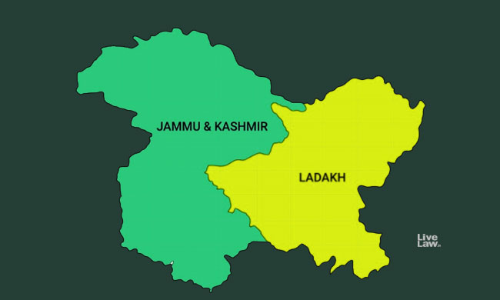
Bifurcation And 'Will Of The People'
The Central Government resolving to do away with the special Constitutional status granted to the State of Jammu and Kashmir passed a Bill abolishing J&K from being a State and sought the creation of two Union territories of J&K and Ladakh respectively. The government of the day through a Presidential order exercised under clause 1 of Article 370 has made the Constitution of India applicable through 'the Constitution (application to Jammu and Kashmir) order 2019 to the people of...
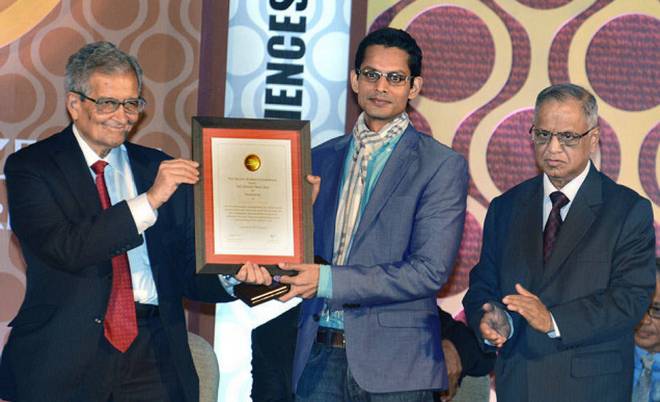
Prof Shamnad Basheer : LiveLaw Lost A Visionary Guide
The shocking news about the death of Professor Shamnad Basheer came to me when monsoon showers were mercilessly pouring down on Kochi.We had a conversation two weeks back and were supposed to meet soon. It took me a while to come to terms with the news, which left me shattered. He was a great source of support and encouragement for LiveLaw, especially during its initial days.He found the idea of a new web portal for legal news to be exciting. Without any hesitation, he agreed to be a part...

The Art of Kindness
I stood there, with my jaws agape, staring. Ten feet away stood a young adult, two years my senior, naked from the waist up, his muscled chest glistening with what suspiciously looked like a copious serving of oil. Draped lazily across him was the prettiest girl in college who was being studiously ignored by aforementioned Greek God.Not the sight you would expect at the National Law School, Bangalore in the fall of 1996. Mercifully, this tableau was not the standard fare during torts class, but...
Re-writing Article 370 : The Legal Test Ahead
The President has, on the recommendation of Parliament,issued the "Declaration under Article 370(3) of the Constitution" in exercise of his powers under Article 370(3) read with Article 370(1) of the Constitution to declare that all clauses of Article 370 would cease to be operative from 6 August 2019, except the clause to the effect that "(a)ll provisions of this Constitution, as amended from time to time, without any modifications or exceptions" shall apply to Jammu and Kashmir (J&K),...
The Supreme Court On Mandatory Voice Samples – II: The Rise Of The Executive Court
In the previous post, Abhinav Sekhri highlighted some of the flaws with the Supreme Court's judgment on the mandatory taking of voice samples from an accused party. In this post, I want to build upon Sekhri's arguments, and make two further points.To start with, in order to prevent misunderstanding, let us get a few basic points out of the way. The debate before the Court wasn't so much about whether the compelled taking of voice samples would violate the guarantee against self-incrimination...
Understanding The Consumer Protection Bill 2019
On 30th July 2019, a bill introduced as the Consumer Protection Bill, 2019 was passed by the Lok Sabha. Presumably the said bill will be passed in the Rajya Sabha and shall receive the assent of the President of India soon as well. Upon the said Bill becoming effective, and subject to the notification passed by the Government, the present Consumer Protection Act, 1986 will stand repealed. The Consumer Protection Act, 1986 was enacted with the objective of providing better protection of the...
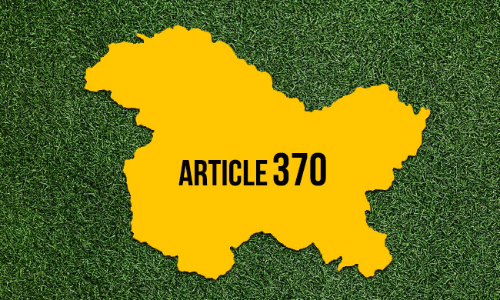
Why The Government's Move On Article 370 Is Unconstitutional
This short piece argues that the actions taken by the President on Monday to move towards the nullification of Article 370 of the Constitution of India are unconstitutional. I will first discuss the relevant constitutional provisions, i.e. Articles 370 and 356, and then briefly describe what the Government did today. I will then explain how the Constitution has been violated.Article 370(1) and Article 356Broadly, Article 370(1) says two things of relevance: first, that Articles 1 and 370 shall,...
The Supreme Court On Mandatory Voice Samples – I: Some Glaring Conceptual Errors
"In the light of the above discussions, we unhesitatingly take the view that until explicit provisions are engrafted in the Code of Criminal Procedure by Parliament, a Judicial Magistrate must be conceded the power to order a person to give a sample of his voice for the purpose of investigation of a crime. Such power has to be conferred on a Magistrate by a process of judicial interpretation and in exercise of jurisdiction vested in this Court under Article 142 of the Constitution of India. We...
The Effect Of Abrogating Article 370, Will It Increase Or Decrease The J&K Autonomy?
The Author is examining the constitutional question, though hypothetical, about the legal nuances of abrogation of Article 370. The rationale offered for seeking abrogation of Article 370 of the Indian Constitution is to remove the autonomy of J&K and allow its full integration into the Indian Union. Let us assume for the sake of argument that it is constitutionally permissible for New Delhi to abrogate Article 370 and that it does do so. But then, would not such hypothetical abrogation...
Why Criminalization Of Triple Talaq Is Uncalled For?
Talaq! Talaq! Talaq! - the three forbidden words under Muslim personal law which engenders the irrevocable breakdown of a marriage. The husband utters these words, sometimes even by text messages, right before he leaves his lawfully wedded wife. Unlike the other forms of Talaq, where a few month's period (iddat period) is observed before the actual divorce, talaq-e-biddat is abrupt and questionably quick. And this, till the recent Supreme Court judgment of Shayara Bano v. Union of India And...