


Articles
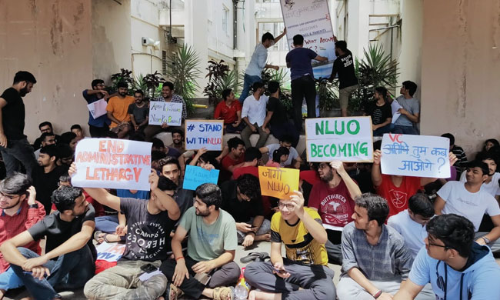
Save The Islands Of Excellence: Problems Ailing NLUs
National Law University, Odisha students went on an indefinite strike against the lack of infrastructure, administrative lethargy, unreasonable policies, lack of reform, and arbitrary fee hike. NLUO has joined the club of NLUs who have to resort to get their demands heard. Few months ago a 25% hike in the annual fee of the National Law School of India (NLSIU) once again triggered the old issue, that is, the exorbitant fee of National Law Universities (NLUs) of India. The annual fee of NLSIU...
The Amendments to the Right to Information Act are Unconstitutional
Yesterday, the Rajya Sabha passed a set of amendments to the Right to Information ["RTI"] Act of 2005, clearing the way for their enactment into law (after Presidential assent). These amendments – as I have summarised here – effectively undermine the independence of the Information Commissioners, by bringing their salaries and terms of appointment under the control of the central government. In this essay, I will argue that these amendments are unconstitutional. The argument is a complex one,...

On The Margins Of Law - Lawyers' Clerks
Although the legal profession and court systems include a wide range of actors and stakeholders, socio-legal research has been focusing only on judges, lawyers and litigants. The background, training, attire and method of judges and lawyers have been well researched and documented. While lawyers and judges permanently occupy the front and center stage, a wide range of actors such as Lawyers' Clerks, Law Researchers, Interns, Court Attendants, Process Servers, Ushers and other court staff are...

Two Former CICs Explain How Amendment To RTI Is Breaking Backbone Of Information Commissioners
The Union Government's plan to amend the Right to Information Act is mainly to alter the salary structure and tenure of Information Commissioners and weaken all the Information Commissioners and Commissions both at Centre and States. "The Right to Information (Amendment) Bill, 2019", has been passed by the Lok Sabha. This was earlier moved in the Rajya Sabha during the previous session of Parliament, but not pressed because of severe criticism. In the debate which then ensued, several ...


Fired For Being Gay: How Are Catholic Institutions In America Legally Evading Anti-Discrimination Laws
On June 21, Joshua Payne-Elliot was having a chat with his husband Layton when he was informed that the latter's Catholic school was asked by the Archdiocese to fire him from a teaching position for being public about his gay marriage. Two days after that conversation, Mr Payne-Elliot, also a teacher at a Catholic High School in Indianapolis, was removed on the same ground and under the orders of the same Archdiocese. While Layton's school refused to follow the order and...

Ex CIC Sridhar Acharyulu Appeals To MPs: Fail NDA's Attempt To Backstab RTI
The Right to Information (Amendment) Bill, 2019 will be a backstab to CIC and deathblow to RTI. It seriously undermines the autonomy of Information Commissions because it reduces the stature of Commissioners, which is now equivalent to Election Commissioner and Judge Supreme Court. Ever since it came into existence in 2005, the Information Commission had enough authority to issue directions to anybody including cabinet secretary, principal secretary, etc regarding disclosure of...
Anti-Defection Law: A Tunnel Of Darkness?
The anti-defection law as enunciated in the Tenth Schedule to the Constitution of India was to answer the menace of unethical political defections eating into vitals of democracy. Defections had reduced people's representatives to nomads wandering whenever and wherever they found lush green pastures to graze. Apart from destabilising duly elected governments, such switching of political loyalties had made a mockery of parliamentary democracy. Once elected and chosen by the voters, the...

ICJ Decision: Yet Another Wake-Up Call for New Delhi
Today's ICJ decision in Kulbhushan Jhadav's case serves to remind us how crucial it is to take recourse (and timely recourse) to international adjudicatory mechanisms to decide international issues. It is against the backdrop of India's success at the ICJ that one must consider whether taking the Kashmir issue to the ICJ is a viable option for New Delhi. It is, in my opinion, the first step towards a resolution of the multi-layered Kashmir problem for the reasons given in my doctoral thesis way...