




Articles

Insurers Without Insurance: OSH Code's Paradox
The Occupational Safety, Health and Working Conditions Code, 2020 (“Code”) came into force on 21 November 2025[1]. On 9th of May, 2026, the Ministry published the Occupational Safety, Health and Working Conditions (Central) Rules, 2026[2]. One of the indispensable provisions of the Code is the definition of “appropriate government” under Section 2(1)(d). It determines whether the Central Government or the State Government will exercise regulatory authority over a particular establishment under...

Criminal Justice System In India With A Special Reference To Investigative Mechanisms
Our legal system has undergone continuous evolution and transformation across ages, civilizations, and historical epochs. The nation that we witness today with pride has, over time, assimilated numerous legal doctrines, principles, and institutional frameworks into its contemporary legal structure, while simultaneously discarding many others that were considered incompatible with the changing needs of society. Such adaptation and transformation, indeed, constitute the very dynamism inherent in...
Service By WhatsApp Is Not Service: Section 35 BNSS And Limits Of Informal Electronic Notice
What happens when a person is arrested as a result of failure to comply with a notice which they did not receive as a result of service by a court, as opposed to service of a warrant by a court? That issue forms the core of the Supreme Court's decision in Satender Kumar Antil v. CBI[1].When the Bharatiya Nagarik Suraksha Sanhita, 2023 (the BNSS) was enacted, many police authorities started to serve notices under section 35[2] via WhatsApp and email. The rationale behind this approach was clear....
Navigating Statutory Silences: A Closer Look At Justiciability Of Self-subscribed Procedure In Criminal Law
The Indian legal landscape is seldom an exception to the regulatory overreach done in the name of procedure. Nevertheless, when such procedure is voluntarily adopted, it ought to align with the tenets of law. This is an analyses of a recent order passed by the Madras High Court in M/s. Jks Constructions Private Limited v The Assistant Registrar of Companies (2026)[1] and poses a pertinent question before us: When a regulatory authority adopts a procedure not mandated by law, how far can that...
Reimagining Legal Education: A Letter To A Marginalised Law Student On Merit, Barriers, And Belonging
In this deeply personal and evocative piece, Anchal Bhatheja, a visually impaired lawyer, Research Fellow at the Vidhi Centre for Legal Policy, and an incoming LL.M. candidate at Harvard Law School, reimagines that foundational conversation. Drawing from Anchal's own lived experiences, addresses the intersecting realities of disability, gender, caste, and institutional exclusion. This letter is not just a guide for those navigating additional structural hurdles; it is an urgent reminder to the...
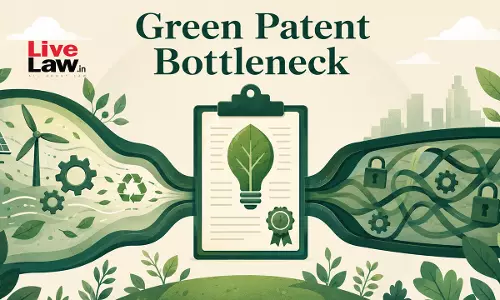
Breaking Green Patent Bottleneck: Is it Time For A “Climate TRIPS Waiver”?
I. The 2026 Dichotomy: Regulatory Sanctions Without Technological SolutionsAs we navigate the second quarter of 2026, the intersection of international trade and environmental jurisprudence has reached a state of critical friction. The global community is no longer debating "if" climate change will disrupt trade, but "how" the law should mitigate the resulting economic disparities. The definitive implementation of the European Union's Carbon Border Adjustment Mechanism (CBAM) has fundamentally...
Preventive Detention And Constitution: Fifty Years Of Jurisprudential Reckoning With UAPA, NSA, And MCOCA
The Constitutional Paradox at the Heart of the Matter India is, to borrow the formulation of the Constituent Assembly debates, a republic that chose to constitutionalise its security anxieties. No other liberal democracy in the postwar world embedded preventive detention so explicitly within its founding document. Articles 22(3) through 22(7) of the Constitution of India carve out a carefully bounded space in which the state may detain a person without charge, without trial, and...
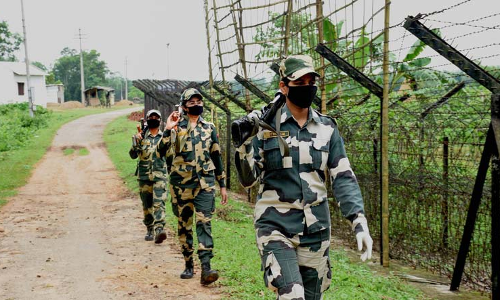
Soldier At The Gate of Justice
There is a distinct structural anomaly in how the Indian legal framework processes the service disputes of its paramilitary forces. The recent judicial trajectory of Baksish Ahmad, a Border Security Force (BSF) constable dismissed from service in 2022 while posted in Narayanpur, Malda, serves as a primary case study. When Ahmad approached the Delhi High Court in 2025 to challenge his dismissal, the Division Bench dismissed his writ petition. The dismissal was not predicated on the merits of the...
AIBE: A Predictable Script: Confidence Before, Chaos Later!
Every year, the All India Bar Examination (AIBE) follows a remarkably predictable script.Months before the exam, aspirants are reassured that there is little to worry about. Seniors dismiss it as a mere formality. Coaching institutes and YouTube channels package it as “the easiest exam a law graduate will ever take.” Social media is flooded with reels confidently declaring: “Nobody really fails AIBE.”What gets steadily sold—and widely consumed is this comforting illusion: that an open-book exam...
Danger Of Judge Made Intra-Court Appeals
In a constitutional democracy, the Supreme Court commands obedience not because it is infallible, but because it is institutionally disciplined. Its power is not the power to react; it is the power to decide according to law. That is why any emerging tendency of the Court to revisit, neutralise, or effectively reopen its own orders in the wake of social media outrage should cause serious concern. The issue is not whether the Court may correct itself. It certainly may. The issue is whether...
Ethical Labyrinth Of Artificial Intelligence: A Legal Analysis In Light Of Deepfakes
Brief Overview of DeepfakesThe technology pertaining to the manipulation of the pictures or photographs was developed in the late nineteenth century. The technology thereafter, with necessary modifications was used to manipulate the motion pictures as well. More technologies became available during the 20th century and changed more rapidly due to the advent of digital video. We are living in the age where the governance of the nation is technologically driven, social media plays a prominent role...
Analyzing Liability In 2026 Draft Regulations For Using Artificial Intelligence In Courts & Suggestions
The New Draft Regulations: A Landmark DevelopmentThe integration of Artificial Intelligence (AI) within Indian courts is no longer a distant prospect. The Supreme Court has initiated a significant development by introducing the “Regulations for the Use of Artificial Intelligence in Courts (2026)”. The adoption of AI is imperative, considering the substantial backlog of cases currently burdening the Indian judicial system.Here Regulation 4 talks about “human primacy”, basically saying AI should...