




High Court
Employee Terminated After Acquittal Entitled To Back Wages Till Reinstatement: Rajasthan High Court
The Rajasthan High Court has held that when an employee is terminated after being acquitted in a criminal case, s/he would be entitled to back wages for the period between such termination and reinstatement. The division bench of Chief Justice Sanjay K Agarwal and Justice Inderjeet Singh observed that even though subsequent acquittal did not retrospectively erase legal consequences of...
Writ Court Can't Sit As Academic Expert To Decide Equivalence Of Degrees Where Rules Prescribe None: Allahabad High Court
The Allahabad High Court has held that where the service rules prescribing the qualification for a post make no provision for consideration of equivalent degrees, the writ court cannot decide whether a degree not named in the rules is equivalent to the one prescribed. It held that in exercise of its power under Article 226 of the Constitution of India, the Court cannot sit as an academic...
AP High Court Quashes MGNREGA Employee's Removal After Panchayat Downgraded, Cites Lack Of Hearing Or Alternative Post Under Policy
The Andhra Pradesh High Court has quashed the removal of a contractual Field Assistant under the Mahatma Gandhi National Rural Employment Guarantee Scheme (MGNREGS) noting that it was done without notice, without giving a hearing and without offering the alternative engagement contemplated under the applicable policy.[2026 LiveLaw (AP) 227]The issue arose after the petitioner failed to meet...
Teacher's Challenge To Termination By Private Unaided Trust Not Maintainable In Writ, Dispute Is Contractual: Allahabad High Court
The Allahabad High Court has held that a writ petition challenging the termination of a teacher by a private unaided educational institution run by a trust is not maintainable under Article 226 of the Constitution. It held that the dispute being a purely contractual one between employer and employee.Distinguishing between the amenability of a private body to writ jurisdiction and...
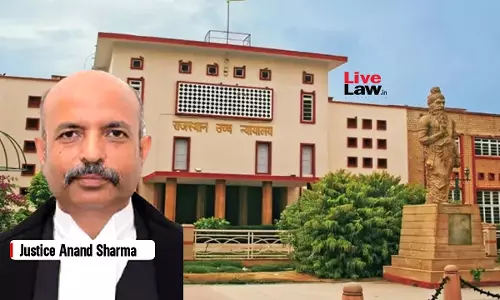
No Distinction Between 'Honourable' & Other Acquittals For Service Benefits: Rajasthan High Court Orders Full Salary For Suspension Period
The Rajasthan High Court has held that there is no legally sustainable difference between 'honourable acquittal' and 'acquittal' for the purpose of granting service benefits to a suspended employee. The bench of Justice Anand Sharma set aside the orders of the employer-LIC (respondent) as per which the petitioner was denied the service benefits for his time when he was put under suspension...
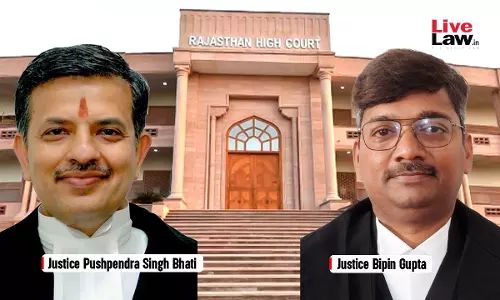
Rajasthan High Court Refuses To Interfere In 'Administrative Issue' Of Posting IPS Officer As Police Superintendent
The Rajasthan High Court has refused to interfere with the administrative issue concerning the appointment of a Superintendent of Police (SP), Nagaur, from the Rajasthan Police Service (RPS) cadre instead of the Indian Police Service (IPS) cadre.A division bench comprising Dr. Justice Pushpendra Singh Bhati and Justice Bipin Gupta was hearing a Public Interest Litigation (PIL) filed by...
Employee Must Be Heard Before Pay-Scale Reduction Even If Initial Appointment Was Irregular: Rajasthan High Court
The Rajasthan High Court has upheld the quashing of an order that reduced pay-scale of employees without affording opportunity of hearing, irrespective of the fact that the initial appointments of the concerned employees against regular posts were irregular and reduction of their pay scale was a consequence of restoring their position prior to such irregularity. The division bench of...
Govt Employee's Married Daughter Can't Be Denied Compassionate Appointment Solely Due To Marital Status: AP High Court
The Andhra Pradesh High Court has held that a married daughter of a deceased Government employee cannot be denied consideration for compassionate appointment merely on the ground of her marital status. [2026 LiveLaw (AP) 226]In doing so, the Court noted that marriage does not sever her bond with or conclusively determine her dependency upon her parental family. It directed reconsideration of...

'National Waste': Kerala High Court Says PG Doctors Can't Be Left Idle Without Posting; 1-Year Bond Runs From Result Date
The Kerala High Court recently held that the mandatory period of senior residency for medical professionals, who did their post-graduation from Government Medical Colleges, starts immediately upon completion of course and not the actual posting date. [2026 LiveLaw (Ker) 538]Justice Viju Abraham observed:“the obligation of a post-graduate students like the petitioners herein as per the...
Recruitment Authorities Are Estopped From Contradicting Previously Accepted Final Answer Key: Tripura High Court
The Tripura High Court has held that recruitment authorities cannot subsequently depart from a position reflected in their earlier final answer key, particularly where the same answer had been accepted as correct in a previous examination. The Court observed that the Teachers' Recruitment Board, Tripura (TRBT), was estopped from taking a contrary stand in respect of an answer which it...
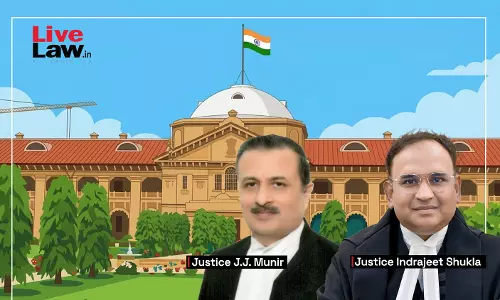
Ad Hoc Appointee Cannot Be Directly Confirmed In Service Without Going Through Statutory Regularization: Allahabad High Court
The Allahabad High Court has held that an employee appointed on an ad hoc basis cannot be directly confirmed in service. It held that a confirmation order which is not traceable to any recruitment, service or regularization rules is void ab initio and confers no legally enforceable right.The Court held that an ad hoc appointment made outside the prescribed recruitment rules is only a...
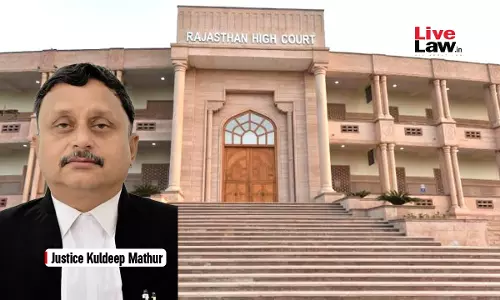
Electronic Records Alone Can't Replace Examination, Cross-Examination In Departmental Inquiry: Rajasthan High Court
The Rajasthan High Court has held that the stages of examination, cross-examination, defence evidence or hearing of arguments, as under Rule 16(6)(a) of the Rajasthan Civil Services (Classification, Control and Appeal) Rules, 1958 (the “Rules”) cannot be avoided merely because the disciplinary authorities considered that documentary or electronic material was sufficient. The bench of...