Supreme court
Top 5 Supreme Court Judgments Of September 2026
September 2026 saw the Supreme Court deliver several significant judgments dealing with financial recovery practices, constitutional safeguards against illegal arrest, misuse of the POCSO Act, preventive detention and the accused's access to prosecution material.From directing the Reserve Bank of India to ensure compliance with safeguards governing vehicle repossession to prescribing...
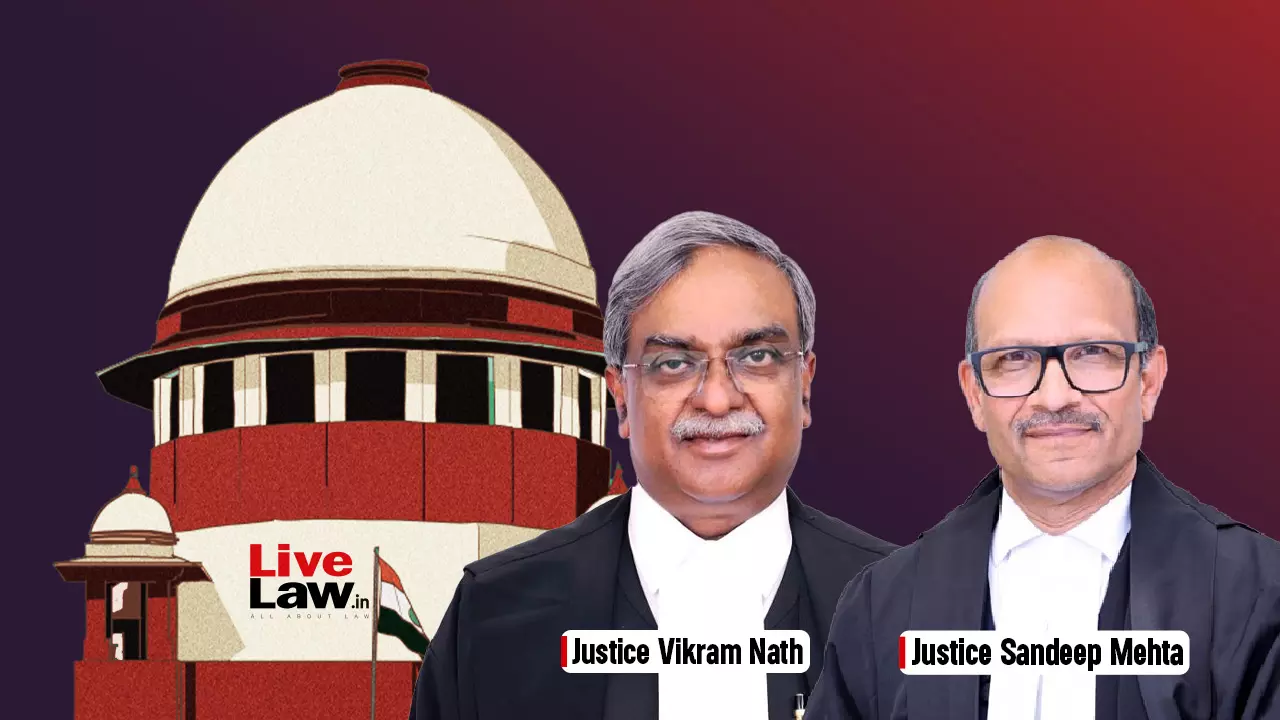
Elected Representatives Can't Assume Role Of Police Or Courts; People's Mandate Not Source Of Unbridled Power: Supreme Court
The Court made these observations while setting aside the bail granted to a Shiv Sena corporator in a case over assaulting doctors.
LiveLaw Supreme Court Criminal Law Digest: August 2026
CBI Investigation - Transfer of Investigation to CBI - Enhancement / Award of Interim Compensation in Public Law - Where state police and jail authorities exhibited blatant indifference, suppressed material facts (such as post-mortem reports before the High Court), and attempted to mislead inquiry via contradictory preliminary jail medical records, the ends of justice require entrusting...

Any Attempt To Intimidate Or Assault Medical Professionals Can't Be Tolerated : Supreme Court
Doctors cannot be expected to exercise sound judgment under the threat of physical violence, the Court stated.

Cattle Transport Can't Be Presumed To Be For Slaughter Due To Mere Absence Of Documents : Supreme Court
The Supreme Court has observed that a mere absence of transport documents cannot give rise to a presumption that the cattle were being transported for slaughter. A bench of Justice J.B. Pardiwala and Justice K. Vinod Chandran set aside the conviction of a man under the Chhattisgarh Agricultural Cattle Preservation Act, 2004 (“Act”), accused of transporting 32 bullocks for...
SARFAESI | Sale Certificate Issued To Non-Bidder Entity That Didn't Exist On Auction Date Is Illegal : Supreme Court
The Supreme Court has held that an entity which did not exist when bids were invited and received in a SARFAESI auction could not subsequently be made the beneficiary of the sale by issuance of a sale certificate in its favour. A bench comprising Justice Pamidighantam Sri Narasimha and Justice Alok Aradhe observed while setting aside the Madras High Court's decision to uphold the auction sale...
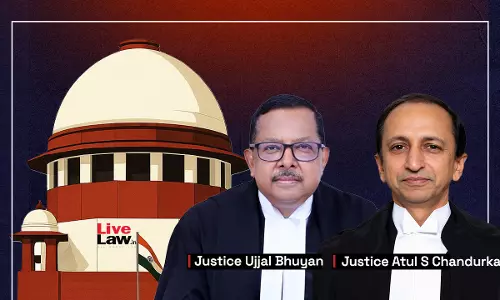
S. 313 CrPC | Statement Of Accused Cannot Be Used To Complete An Unestablished Chain Of Circumstances : Supreme Court
While acquitting a man convicted of raping and murdering his six-year-old maternal niece, the Supreme Court on Thursday (October 1) held that the conviction cannot be recorded solely based on defence statements under Section 313 Cr.P.C. / Section 351 BNSS when the prosecution otherwise failed to prove the guilt of the accused beyond a reasonable doubt. In other words, the accused's answers...
SARFAESI | Bids Received In Defiance Of Restraint Order Cannot Form Foundation Of Valid Sale: Supreme Court
The Supreme Court on Wednesday (September 30) set aside an auction sale concluded in defiance of the Security Interest (Enforcement) Rules, 2002, noting that bids had been received in violation of a restraint order on the auction sale and that the sale had taken place before the expiry of the 30-day notice period to the borrower. Amongst other things, a major violation occurred of the...

Impound Vehicles With Unpaid E-Challans, Freeze Online Services: Supreme Court Orders, Notes Over ₹23,000 Crore Traffic Fines Pending
The Court also ordered the freezing of online services, blacklisting and denial of fitness/PUC certificates for unpaid e-challans.
IBC | CIRP Need Not Be Set Aside Merely Because S 9 Application Was Filed Fraudulenty : Supreme Court
The Court said that while the Adjudicating Authority can recall the admission of a Section 9 application on the ground of fraudulent jurisdictional facts, the CIRP need not automatically be terminated.