




Supreme court
Supreme Court Criticises Allahabad High Court For Casually Granting Probation To Convicts In Brutal Attack Case
'Nature of offence' and 'character of offender' must guide probation, the Court stated
Supreme Court Quashes Rajasthan High Court's Disciplinary Proceedings Against Judge Over Bail Order
The Supreme Court has quashed disciplinary proceedings initiated against a Rajasthan judicial officer(since retired) for granting bail to two accused persons despite their earlier bail applications having been rejected by the High Court, observing that counselling or a warning would have sufficed in the peculiar facts of the case. A bench of Justice B.V. Nagarathna, Justice R. Mahadevan and Justice Devendra Kumar Upadhyaya directed the Rajasthan Government and the High Court to recompute the...
Supreme Court Sets Aside Orders Rejecting Waqf Trust's Objection To Execution Of Property Decree, Orders Fresh Inquiry
The Supreme Court has set aside orders rejecting a claim petition filed by Alladin Charities and Zakat Wakf, which sought to resist the execution of a decree for possession of a property in Hyderabad, and remanded the matter to the executing court for fresh consideration.A bench of Justices S.V.N. Bhatti and N.V. Anjaria held that the findings recorded by the executing court and the Telangana High Court did not conform to well-established principles of law. The Court directed the VII Senior...
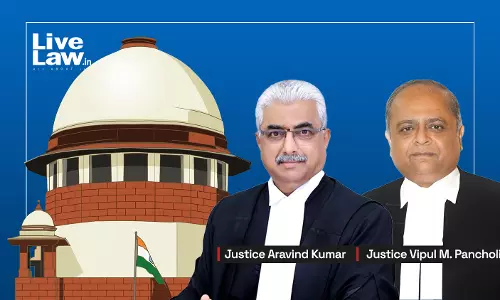
Auction Can't Be Cancelled Merely Because Fresh Bids Are Lower Than Earlier Offers : Supreme Court
Power to cancel auction must be exercised fairly, the Court stated.
Students' Fees Cannot Be Hiked Midway Through Professional Courses Except In Exceptional Circumstances: Supreme Court
Fee regulatory commissions must strive to notify the fee payable for the entire course at the threshold itself, the Court stated.
Ambiguity In Recruitment Criteria To Be Construed In Candidate's Favour: Supreme Court
The Supreme Court has held that ambiguity or vagueness in eligibility criteria prescribed in a recruitment advertisement should be construed in favour of a candidate who prima facie possesses the requisite qualifications. “…any ambiguity or vagueness in the prescribed qualification should be construed to the benefit of the candidate who prima facie appears to possess the requisite qualifications.”, observed a bench of Justice Prashant Kumar Mishra and Justice Shree Chadrashekhar, while setting...
State Must Be Made Party If Relief Is Sought Against Public Exchequer; Impleading Officer Or Dept Not Enough : Supreme Court
An officer or a department of the State cannot be equated with the State itself for the purposes of fastening sovereign or financial liability
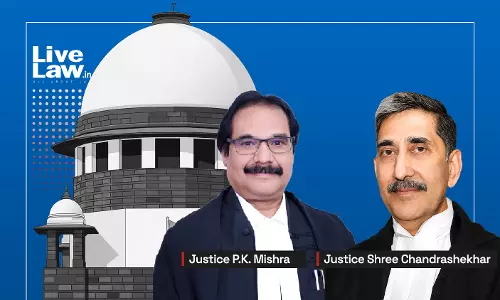
BREAKING | Converts To Non-Hindu Religions Can't Claim Backward Class Quota Solely Based On Pre-Conversion Status : Supreme Court
A person's pre-conversion caste/community cannot be transposed in the post-conversion social order.
Should Intra-Court Appeals Be Denied Just Because Writ Petition Dealt With Criminal Issue? Supreme Court Refers To Larger Bench
The Court doubted the 2017 precedent in 'Ram Kishan Fauji'
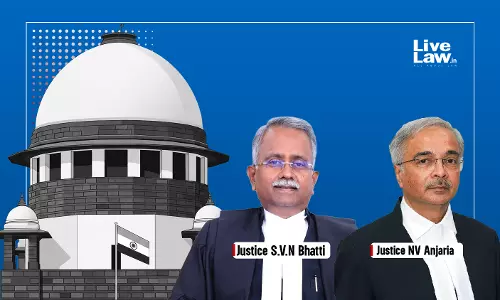
S. 62 IBC | Limitation For Filing Appeal Runs From NCLAT Order Pronouncement, Not Receipt Of Certified Copy : Supreme Court
The Supreme Court on Wednesday (October 14) has held that the limitation period for filing an appeal under Section 62 of the Insolvency and Bankruptcy Code, 2016 begins from the date the National Company Law Appellate Tribunal pronounces its order, and not from the date on which the appellant receives the certified copy. A bench of Justice S.V.N. Bhatti and Justice N.V. Anjaria held that the time spent by a litigant in applying for and obtaining a certified copy can be excluded under Section...
PMLA | ED's Delay In Forwarding Arrest Order To Adjudicating Authority Doesn't Automatically Vitiate Arrest : Supreme Court
Ideally the forward should be simultaneous with the arrest, Court said.
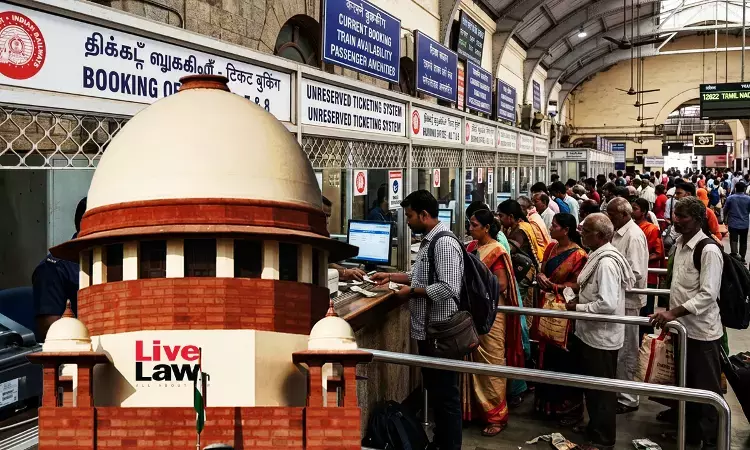
Give Insurance Cover To Tickets Sold Over Counter Like Online Tickets : Supreme Court Directs Railways
In a significant case, the Supreme Court has ordered Indian Railways to provide insurance coverage to tickets purchased at the railway reservation counters within two weeks, with effect from October 27. It said the insurance coverage should be the same as when tickets are purchased online. A bench comprising Justice Ahsanuddhin Amanullah and Justice R. Mahadevan passed this order while hearing...