



Supreme court
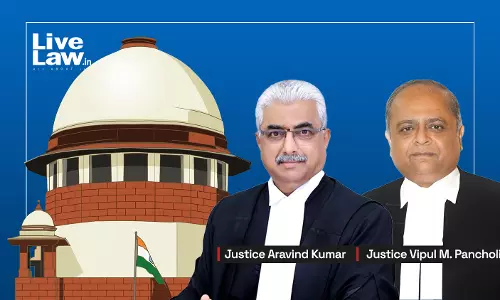
Mere Suit Seeking Recovery Of Possession Not Sufficient When Plaintiff's Title Is Disputed : Supreme Court
The Supreme Court has held that a suit simpliciter for recovery of possession without seeking a cancellation of a sale deed would not be maintainable when the plaintiff's title is disputed. According to the Court, when the plaintiff's title was disputed by the defendant by cogent evidence, then the proper remedy for the plaintiff would be to file a suit for cancellation of the sale deed...
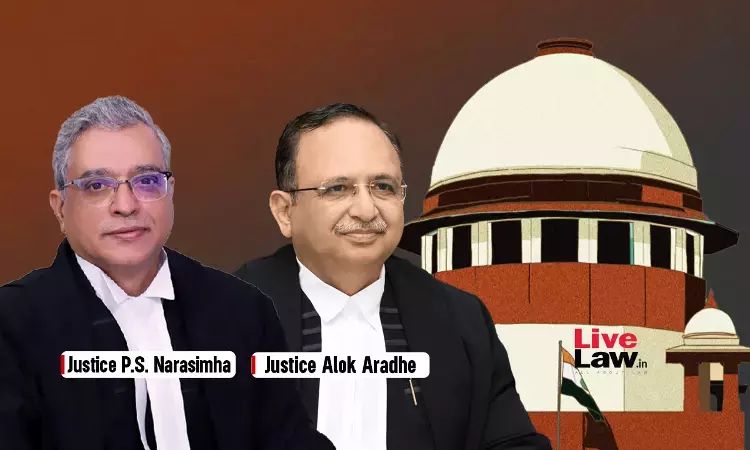
Public Authority Can Revisit Auction To Maximise Price Of Public Property Before Binding Contract Is Concluded: Supreme Court
"While dealing with matters relating to sale or lease of public property, the action of a public authority to recall or revisit the auction process would be justified if the decision is intended to maximise the price for the sale/lease of public property"
Disputed WhatsApp Message Cannot Sustain Conviction: Supreme Court Acquits Man In Murder Case
The Supreme Court has acquitted a man convicted of murder, holding that WhatsApp messages allegedly linking him to the crime could not sustain his conviction when the purported sender denied sending them and the prosecution witnesses did not support the prosecution's account of the incident.A bench of Justice Manoj Misra and Justice Vijay Bishnoi heard the case, where the accused was...
Pre-Trial Detention Cannot Be Permitted To Degenerate Into Punishment Without Trial : Supreme Court
Gravity of the allegations, however serious, cannot by itself justify indefinite pre-trial detention, the Court added.
Supreme Court Quashes Blacklisting Of Drug Supplier Over Quality Failure As Retesting Opportunity Denied
The Supreme Court has quashed the blacklisting of a pharmaceutical supplier by the Madhya Pradesh government after finding that the authorities failed to follow the mandatory procedure for retesting drug samples before imposing punitive action.A bench of Justices Vikram Nath, Augustine George Masih and Sandeep Mehta set aside orders blacklisting M/s JPEE Drugs for three years and debarring...
Motor Accident Claims | Victim Requiring Lifelong Attendant Can Be Considered 100% Functionally Disabled : Supreme Court
The Supreme Court has held that a person who remains dependent on another and requires an attendant throughout life can be considered to be suffering from 100% functional disability, even if the Medical Board certifies a lower percentage of medical disability.“Even though the Medical Board certified the medical disability to be 75.5%, the functional effect can be said to be debilitating for...
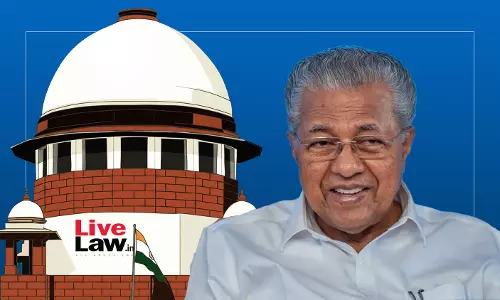
Supreme Court Stays Investigation In Kerala FIR Against Ex-CM Pinarayi Vijayan & Kin In Exalogic Case For 10 Days
The Supreme Court allowed Vijayan and co-accused to file appeal before the High Court Division Bench against the Single Bench direction to register FIR.
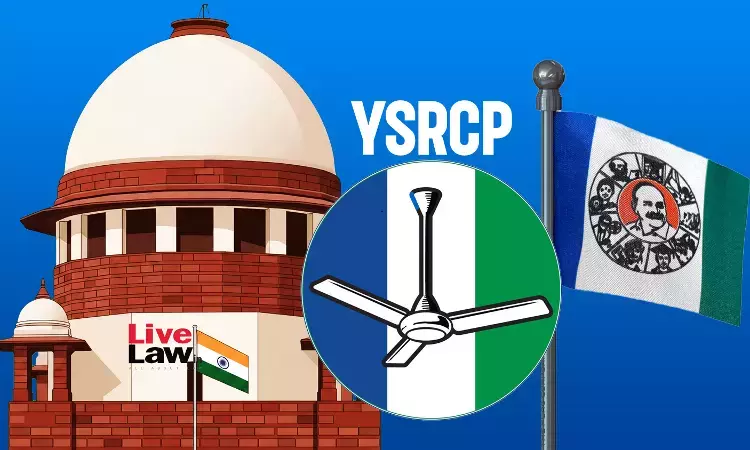
AP Municipal Polls : Supreme Court Asks State Election Commission To Decide On YSRCP Plea To Extend Nomination Deadline
The Court asked the SEC to postpone the publication of final list of candidates till October 25.
Know The Law | When Can A Plaint Be Amended After Trial Has Begun? Supreme Court Explains Order VI Rule 17 CPC
The Supreme Court has recently explained as to when a plaint be amended under Order VI Rule 17 of Code of Civil Procedure, 1908 (CPC) once the trial has begun, while allowing the amendment subject to costs of Rs 25,000.A bench of Justice BV Nagarathna and Justice R Mahadevan explained the law while setting aside orders of the trial court and the Orissa High Court refusing an amendment. Order...
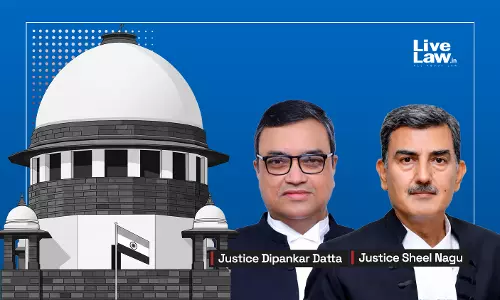
Precedents Barring Recovery Of Excess Payments Have Not Considered Section 72 Contract Act: Supreme Court
The Supreme Court has recently observed that not a single precedent has remarked on the applicability of Section 72 of the Indian Contract Act, 1872 in the line of decisions dealing with recovery of excess payments.A bench of Justice Dipankar Datta and Justice Sheel Nagu made the observation while dismissing appeals by teachers whose Academic Grade Pay benefits were withdrawn after they...