Supreme court
Supreme Court Flags AI-Generated Fake Judgments In Compilation Filed By Party
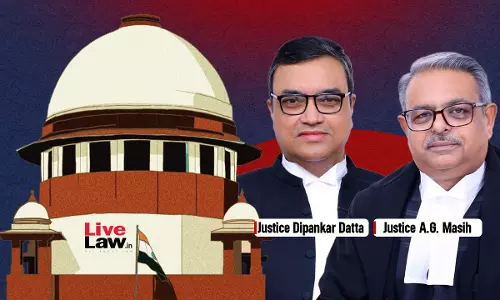
The Supreme Court has flagged an “undesirable incident” involving the alleged use of AI-generated, non-existent judgments in a compilation of cases submitted on behalf of the appellants, expressing concern over the conduct of the lawyers involved in the matter.A Bench of Justice Dipankar Datta and Justice Augustine George Masih, while dismissing appeals filed by GSTAAD Hotels Pvt. Ltd. and Neo Capricorn Plaza Pvt. Ltd. against the initiation of insolvency proceedings against them, recorded that...
RBI Was Mere Bystander When YES Bank Carried Out Business Clandestinely : Supreme Court
The Supreme Court has observed that it would be “highly unfair” to make investors bear the consequences of administrative lapses, after the Reserve Bank of India (RBI) allegedly allowed YES Bank's Common Equity Tier 1 (CET1) ratio to fall to 0.6% despite earlier irregularities in the bank's functioning. “The RBI was a mere bystander, allowing the CET1 ratio of YES BANK to drop to an astonishing low of 0.6% while the business of YES BANK was being carried out in a clandestine manner. It cannot...
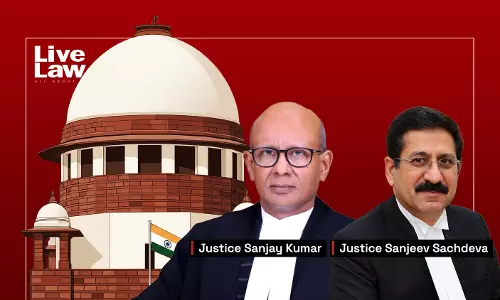
Supreme Court Sets Aside Gift Deed Executed Over Share Given Up In Family Settlement
The Supreme Court has held that a person having parted with his share in a property via a compromise deed cannot later execute a gift deed in relation to the same property. The Court faulted the Telangana High Court's order for overlooking a compromise deed before upholding the execution of a gift deed by a man who had already relinquished his share via a compromise deed. A bench of Justice Sanjay Kumar and Justice Sanjeev Sachdeva heard a case in which a man, despite having relinquished his...
Supreme Court Criticises Allahabad High Court For Casually Granting Probation To Convicts In Brutal Attack Case
'Nature of offence' and 'character of offender' must guide probation, the Court stated
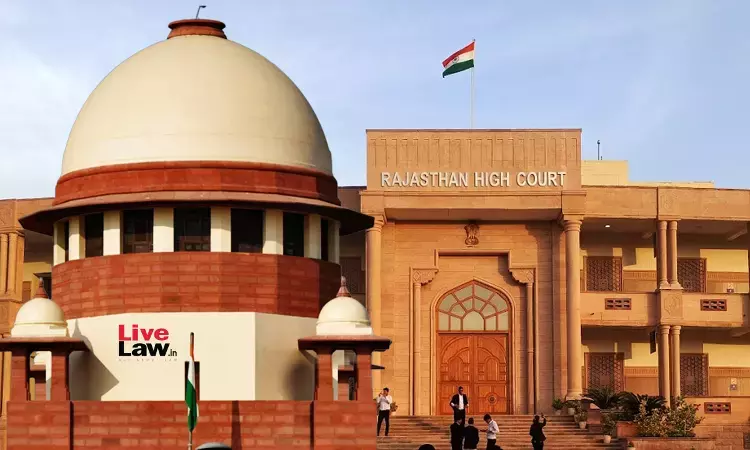
Supreme Court Quashes Rajasthan High Court's Disciplinary Proceedings Against Judge Over Bail Order
The Supreme Court has quashed disciplinary proceedings initiated against a Rajasthan judicial officer(since retired) for granting bail to two accused persons despite their earlier bail applications having been rejected by the High Court, observing that counselling or a warning would have sufficed in the peculiar facts of the case. A bench of Justice B.V. Nagarathna, Justice R. Mahadevan and Justice Devendra Kumar Upadhyaya directed the Rajasthan Government and the High Court to recompute the...
Supreme Court Sets Aside Orders Rejecting Waqf Trust's Objection To Execution Of Property Decree, Orders Fresh Inquiry
The Supreme Court has set aside orders rejecting a claim petition filed by Alladin Charities and Zakat Wakf, which sought to resist the execution of a decree for possession of a property in Hyderabad, and remanded the matter to the executing court for fresh consideration.A bench of Justices S.V.N. Bhatti and N.V. Anjaria held that the findings recorded by the executing court and the Telangana High Court did not conform to well-established principles of law. The Court directed the VII Senior...
Auction Can't Be Cancelled Merely Because Fresh Bids Are Lower Than Earlier Offers : Supreme Court
Power to cancel auction must be exercised fairly, the Court stated.
Students' Fees Cannot Be Hiked Midway Through Professional Courses Except In Exceptional Circumstances: Supreme Court
Fee regulatory commissions must strive to notify the fee payable for the entire course at the threshold itself, the Court stated.
Ambiguity In Recruitment Criteria To Be Construed In Candidate's Favour: Supreme Court
The Supreme Court has held that ambiguity or vagueness in eligibility criteria prescribed in a recruitment advertisement should be construed in favour of a candidate who prima facie possesses the requisite qualifications. “…any ambiguity or vagueness in the prescribed qualification should be construed to the benefit of the candidate who prima facie appears to possess the requisite qualifications.”, observed a bench of Justice Prashant Kumar Mishra and Justice Shree Chadrashekhar, while setting...
State Must Be Made Party If Relief Is Sought Against Public Exchequer; Impleading Officer Or Dept Not Enough : Supreme Court
An officer or a department of the State cannot be equated with the State itself for the purposes of fastening sovereign or financial liability