


Articles

Pertinence Of The "Failing Firm Defence" In Light Of COVID-19
Measures in India to combat the COVID impact on Competition Law: The COVID pandemic has crippled the world economy, bringing it to its knees. The "Lock – Down", being a measure to address the pandemic, has resulted in dire economical distress on businesses across different industries and sectors. Evidently, there has been a market disruption in supply / demand chains prompting the Competition Commission of India to release an advisory dated 19th April 2020 for businesses to co-ordinate...

PMO And PMCARES Cannot Refuse RTI
Being a public authority, PMO cannot deny the information about PMCARES Fund, which is created and controlled by it. Like PMO, PMCARES fund is also public authority under RTI Act. Copies of the trust deed of PM CARES Fund, related Orders, notifications and circulars related to creation and operation of PM CARES Fund Trust were sought by Kandukuri Surya Harsha Teja, a law student. PMO rejected. The PM CARES Fund is an abbreviation of 'Prime Minister's Citizen Assistance and Relief...
Criticism and Diatribe : Grading Is Normal
Criticism is externalisation of self criticism. Self criticism is a duty to self. It helps the self to correct its own thought and thought process. It is anterior to expression of the thought to the world as a truth. Why does one express his thoughts to the external world? To gain acceptability of his thoughts. But no one expects acceptance without the acceptors judging it for themselves. Here comes the external criticism. This is the test by fire and process of steeling of the thought....
PM CARES - What does the Emblem of India Symbolize?
The Prime Minister on 28th March, 2020 announced the launch of the Prime Minister's Citizens Assistance and Relief in Emergency Situation (PM-CARES) Fund to accept donations to provide relief during COVID 19 pandemic, and other similar emergencies. On 1st April Shri Harsha Kandukuri an LLM student filed an RTI with the Prime Minister's Office for trust deeds of PM –CARES fund, all government orders, notification, and circulars relating to creation and operation of the PM-CARES fund...
Ad-Interim to Interim Stage : Delhi HC Takes A U-Turn To Vacate Stay Against BG Invocation
On May 29, Delhi High Court vacated its earlier stay order on Bank Guarantee encashment and held that COVID – 19, a force majeure event, does not excuse contractor's non-performance of a contract "for which the deadlines were much before the outbreak itself". Factual Matrix Selected in a competitive bidding process, Halliburton Offshore Services Inc. ("Contractor"/ "Halliburton") executed contract dated April 25, 2018 with Vedanta Limited ("Company") for fast track...
Supreme Court Of India Has No Sign Language Interpreters!
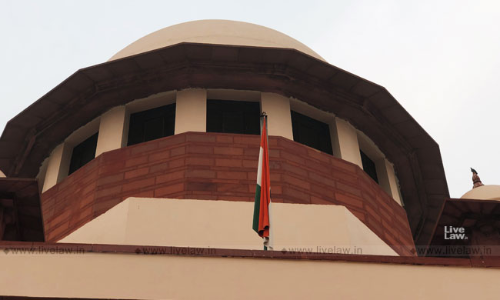
An online demonstration of the Supreme Court e-filing module was held and webcast on Friday, May 15/2020 which was attended by CJI SA Bobde and the Chairperson of the Supreme Court e-Committee, Justice DY Chandrachud. In this session the Hon'ble CJI SA Bobde gave his Presidential remarks, and Hon'ble Justice DY Chandrachud delivered an address encompassing the background and purpose of the live demonstration. Unfortunately, the entire process was not accessible for deaf population of...
Juvenile Justice Act And Misplaced Objectives
The Bois Locker Room issue has raised many important questions regarding consent, boys' culture and privacy. Most of the students who were part of the Instagram group have been booked by the Delhi Police are in grade 11th and 12th. As most of these students would be below the age of 18, they would be tried under the Juvenile Justice (Care and Protection of Children) Act, 2015("Act"). Every time an offence is committed by Juveniles that enters the larger public discourse, the narrative...
Interventionist Judiciary Is A Necessary Shining Sword Of Modern Constitutionalism
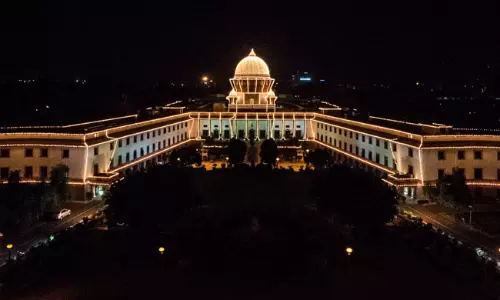
The millions of migrants breathed a sigh of relief when the Supreme Court of India (SC) passed its interim directions on May 28 in a suo motu Public Interest Litigation (PIL) to redress their miseries caused by the unplanned lockdown to beat the coronavirus. However, the extraordinary intervention sparked a debate whether, SC should have refrained itself to the majoritarian art of governance. Needless to say that the Supreme Court is the seat of justice for arbitrating between the...
'The Law Is An Ass': Charles Dickens And The Law
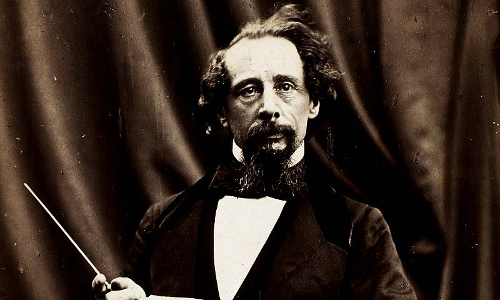
Charles Dickens passed away on 9th of June, 1870. His 150th death anniversary is unlikely to pass without reminiscing, as the sheer quality of his work has stood the test of time. Personally, I have been a huge fan of his works, having read some of his prominent works during childhood. The lockdown period gave me an opportunity to re - read his novels, and being a practising lawyer, I was thrilled to observe that his novels are teeming with legal life. From David Copperfield to The Tale...
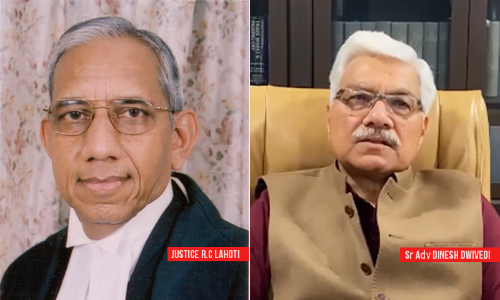
Judicial Silence Would Have Reaffirmed "Tyranny Of The Elected" : A Response To Ex- Chief Justice
A persistent pressure is being mounted from unlikely quarters on the Courts, particularly the Supreme Court, to desist from intervening in the matter of grave national crisis concerning the migrants. Persistent inaction of the governments has resulted in the heaping of unimaginable miseries on millions of migrants trudging on the roads on foot, short of food and water, as well as the necessary means of survival. At this critical juncture, the advisory to the courts to refrain from ...

Privacy In Cyber Space
Dr. Jasmine Alex My son, when he was six years old, vehemently opposed one of my relatives taking his photographs in a family function. Being embarrassed among the crowd due to his discourteous screams, I inquired the reason why he was so blunt in such a family gathering and he frantically revealed his dislike and apprehension on his photos being immediately uploaded by these uncles and aunts to the 'Facebook'. That was a very personal incident which opened up my inner eyes, towards the...