


Articles
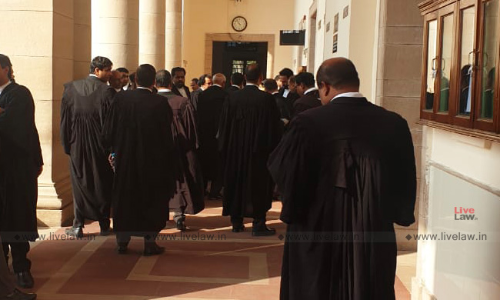
Historical Background Of Wearing Black Robes By Advocates
"Being a lawyer is not merely a vocation. It is a public trust, and each of us has an obligation to give back to our communities." - Janet Reno Dress Code is a 'symbol of confidence', a 'symbol of discipline', a 'symbol of the legal profession' and a 'proud part of an individual's personality' for a profession. The balance between maintaining the Court's decorum and permitting freedom in an individual's lifestyle is...

COVID-19 And Jus Cogens Norm Implication On China
Jus Cogens are higher norm in international law, which binds the states independent of states treaty obligation, because international law is largely informal and consent oriented, jus cogens norm play a crucial role in regulating the conduct of states; however, only very few norms have attained the status of jus cogens, one of which being right to life, besides being a jus cogens norm right to life is acknowledged as a non-derrogable human right as codified under Article 3 of Universal...
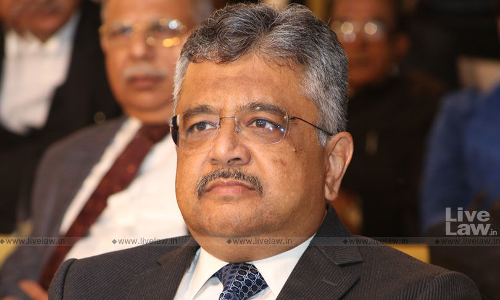
Professional Ethics: A Gentle Reminder To The Solicitor General Of India
The Solicitor General of India is the Second Law Officer of our Country – India. It is not a Constitutional but a Statutory Authority and a very respectable post. Young Lawyers aspire to achieve it someday. Mr. Tushar Mehta is an energetic and luminous Senior Advocate of the Supreme Court of India and is currently the Solicitor General of India who advises the Government of India and appears on behalf of the Union of India in terms of the Law Officers (Terms and Conditions) Rules,...

Some Problematic Areas Of Delhi HC Video Conferencing Rules : Marking Of Evidence, Remand Of Accused, 313 Statement Etc
1st June, 2020 marked a historic day for the justice administration system for the entire country, and more particularly for the nation's capital. The Delhi High Court notified the High Court of Delhi 2020 (hereinafter, "Rules") which allow for all stages of judicial proceedings to take place through video conferencing. The Court also passed separate notifications under Rule 1(i) of the Rules to make the Rules come into force with effect from 1st June, 2020 and to make the Rules ...
Prosecutors Cannot Lose Sight Of Rights Of Citizens
The Bar Council of India Rules on "Standards of Professional Conduct and Etiquette" cast a high duty on all Advocates to restrain and prevent their clients from resorting to sharp or unfair practices and to use restrained language in correspondences (Section I Rue 4). While all advocates are duty bound to fearlessly uphold the interests of their clients, a higher burden is cast on Prosecutors to be fair and not just seek convictions. The Bar Council Rules are not exhaustive and...
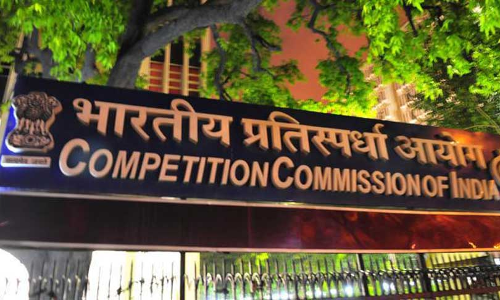
Monsanto v. CCI – A Critique of Delhi High Court's Judgment
Introduction A Single Bench of the High Court of Delhi gave its judgement in Monsanto Holdings Pvt. Ltd. & Ors. v. Competition Commission of India & Ors. on 20th May 2020, dealing with the question of overlap of jurisdiction between the Competition Commission and the Patents Controller. This paper aims to present a critique of the judgement by analysing the core arguments and examining the conflict between Competition Act, 2002. and the Patents Act, 1970. While one perception regarding...

COVID-19 And Relief Under RERA- A Critical Analysis
The pandemic COVID-19 outbreak has created a huge impact on the economy. Which in turn pushed sentiment in real estate to its all-time lowest level. It has affected not only the residential and but also the commercial real estate sector. The residential sector has been facing a lower demand, which has now put the developers in dilemma regarding taking a risk by launching any new projects. Since because of various factors such as shortage of material and labour, construction for on-going...

Fundamental Freedoms And The Extent Of Permitted Restrictions: Analyzing Maharashtra Gag Order During Covid-19
On 23rd May 2020, the Dy. Commissioner of Police, Greater Mumbai (Operations) & Executive Magistrate issued an Order under Section 144 of the Criminal Procedure Code ("CrPC") to curb the dissemination of fake news which is resulting in the spread of COVID - 19. In view thereof, the Order prohibits the dissemination of information through various messaging and social media platforms, like WhatsApp, Facebook, Instagram, found to be (i) incorrect and distorted; (ii) derogatory and...

Virtually Not Your Court
A man is on trial for murdering his wife, although a body has not been found. His lawyer says there is not enough evidence. "The ex-wife is not even dead, I am going to prove it to you, she is going to walk through the door in about one minute." All eyes are focused on the door. A minute passes. Another minute passes. And another. The prosecution says: "she didn't walk in." "But the fact that you were all staring at the door expectantly proves that there is...

The Intrinsic Interplay Between The Right To Dignity And Rule Of law
Rule of Law and the Right to dignity are but two sides of the same coin, inasmuch as neither can exist without the other. The fundamental value that certitude in law holds for the protection of human dignity has never been so acutely experienced in recent history as in the past couple of months. Undoubtedly, this unprecedented crisis has brought forth our peoples' spirit of duty and of service to the hilt. Despite having been taken off guard, our country has so far remained...
Timely Completion Of CIRP Under IBC Post 2019 Amendment A Conundrum
As per Section 12 of the Insolvency and Bankruptcy Code, 2016 (hereinafter referred to as "Code"), Corporate Insolvency Resolution Process (hereinafter referred to as "CIRP") should be completed within 180 days from the date of admission of application by financial or operational creditor to initiate such process. However, this period can be further extended to maximum 90 days, provided an application is filed before the adjudicating authority (i.e. NCLT) by the Resolution Professional...
PM-Cares Vs PMNRF: Where Is My Money Going?
The Present Article is an attempt to look into the affairs of the Prime Ministers National Relief Fund (PMNRF) and the Prime Minister's Citizen Assistance and Relief in Emergency Situations Fund' (PM CARES Fund) PMNRF: The PMNRF was established pursuant to an appeal made by way of a press note dated 24/01/1948 by the then Prime Minister Jawahar Lal Nehru. He felt the need to have such a fund to make ends meet in the hard times owing to rioting and exodus from Pakistan on occasion of ...