


Articles
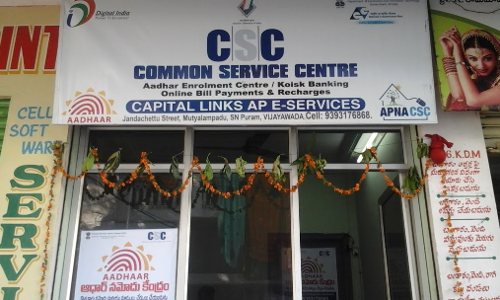
Who Is The State?: Reconsidering Article 12 In The Context Of Common Service Centres
The delivery of government services through the public-private partnership (PPP) model has been a key plank of the government's development agenda. Under the CSC 2.0 Scheme, Common Service Centres, or CSCs, have been set up in villages, and are empowered to provide essential government services, such as enrolling for PM KISAN pensions, or to provide documentation such as birth certificates. These centres are operated by a Village Level Entrepreneur in return for a small commission. ...
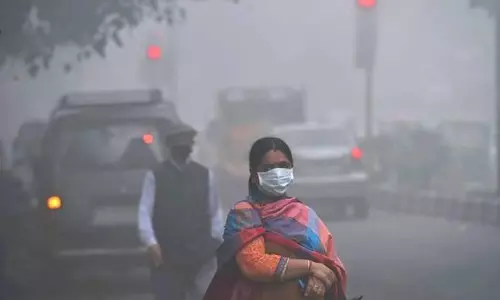
Delhi Air Pollution: Judicial Interventions In Abating Vehicular Emissions
For last few years now, Delhi National Capital Region (NCR) has been grappling with air pollution crisis. Scores of studies have emerged which attribute this state of affairs to coal-fired power plants, vehicular pollution, burning of crop residue, emissions from heavy industries, construction dust and bursting of Diwali firecrackers, among other reasons. While all these contribute to air pollution in varying percentages, most studies concur that vehicular emissions play a huge role in the...
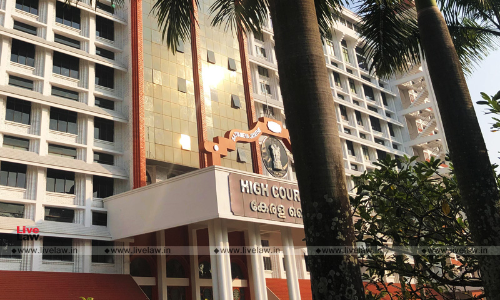
Remedy Of The Licensor Is Mandatory Injunction And Not Eviction Or Recovery Of Possession
In the decision reported in Madhu Gupta v. K.T. Hassan Koya 2019 (5) KHC 42, a learned single Judge of the High Court of Kerala in a second appeal, after reversing the findings concurrently recorded by the Courts below that the suit transaction is a lease and not a license, remanded the case to the trial Court for disposal afresh after giving the plaintiff an opportunity to incorporate the substantial relief of eviction. A reading of paragraph 3 of the reported decision goes to show...

Some Dos And Don'ts Of Document Disclosure/Discovery In International Arbitration
Most Arbitrations are fact-intensive and a majority of cases turn on facts which are often disputed. Therefore, the importance of fact-finding in an arbitration can hardly be emphasised enough. In this endeavour, modern tribunals accord much greater worth to contemporaneous documents rather than oral testimony. The principal documents, such as the contract in question and important correspondence, are usually filed by the parties at the earliest stage, usually along with their written...

Highlights Of The Personal Data Protection Bill 2019
On whom the Bill will be applicable? The Bill is applicable on processing of personal data by State Companies either incorporated in India or foreign companies dealing with personal data of individuals in India. any citizen of India or any person or body of persons incorporated or created under Indian lawdata has been collected, disclosed, shared or otherwise processed within the territory of Indiadata fiduciaries or data processors not present within the territory of India, if ...
The 2019, An Anti-RTI Year!
The 2019, an unforgettable bad year for RTI, the people's right diluted in the 70th year of Constitutionally ruled India. 2019 infamous Amendment that shrunk the size, significance, and power of Information Commissioners, besides violating the federal scheme of Indian Constitution. While 12th October is celebrated as day of empowering citizen with information, the Government of India has assaulted the access right with a strong blow through Rules 2019, far more damaging than the...
'Aren't The Students Citizens As Well?: A Perspective On Nirma University Incident
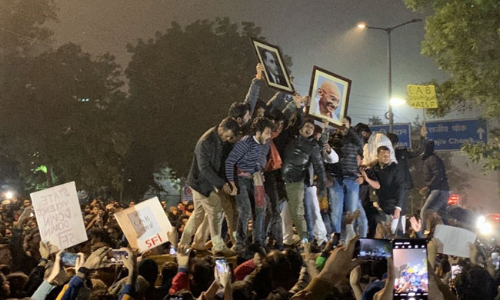
I vividly remember that one lecture delivered by a professor of the Institute of Law, Nirma University, Ahmedabad, where he was explaining a topic related to Legal-Political Philosophy. Halfway through the lecture, he got annoyed because one of the students was conversing with a classmate (the student asserted that he had to pass on an urgent message). This may sound like a regular classroom scene, and I might have even forgotten this incident, if the professor had not taught us a bitter...
Death Of The Sole Public Servant Does Not Enable The Special Judge Under The P.C. Act To Transmit The Case To The Regular Criminal Court For Trial Of The Surviving Non-Public Servants
I chanced to come across a recent judgment of a learned single Judge of the High Court of Kerala directing the Special Judge exercising jurisdiction under the Prevention of Corruption Act, 1988 ("The P.C. Act" for short), to transmit the C.C. case pending before it to the Court of the Chief Judicial Magistrate ("CJM" for short) for trial and disposal. In that case, a public servant and two non-public servants were charge sheeted by the Vigilance and Anti Corruption Bureau ("VACB" for...
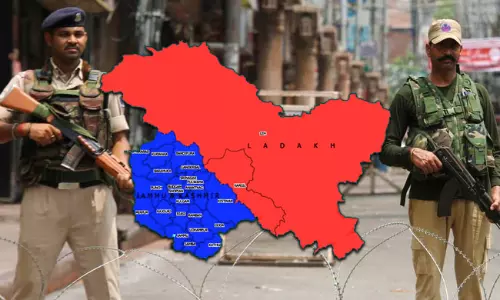
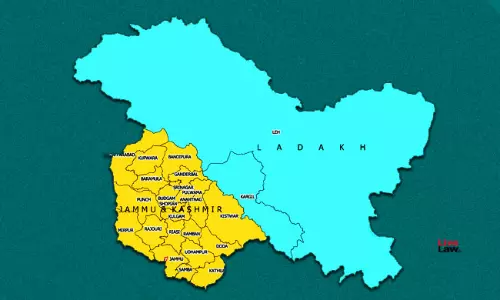
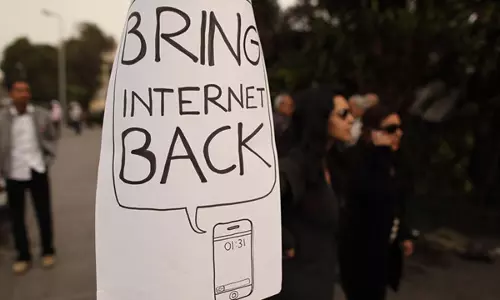
The Kashmir Internet Ban – What's At Stake
A three-judge bench of the Supreme Court has heard oral arguments and reserved its judgment in Anuradha Bhasin v. Union of India and Ghulam Nabi Azad v. Union of India, in which the petitioners have impugned, among other things, the ongoing shutdown of the Internet in the Kashmir Valley. The arguments raised in these petitions touch upon questions critical to the functioning of India's democracy. This post is an effort at expounding some of the issues at stake in the case.FactsSometime on August...

POSH And Higher Educational Institutions
POSH – Prevention of Sexual harassment of women at Workplace Law... Whenever, Wherever we say POSH, we often think about Corporates, The large establishments, Offices, Government undertakings etc., but we hardly think about the Higher Educational Institutions. In India, the institutional framework of higher education consists of Universities and Colleges. As reported in 2015, India has 760 universities and 38,498 colleges. India's higher education system is the third-largest in the...