


Articles
Use Of 'No Useful Purpose' Doctrine To Stall Enquiry Commission Looking Into Serious Corruption Allegations
In an interesting non-reportable judgment i.e., CITU v State of Maharashtra, the Supreme Court, in a 3-judge combination, has held as follows: "We are of the considered view that though normally in such a case a judicial inquiry should have been conducted but as far as the present case is concerned, more than a quarter of century has elapsed since the first PPA was executed. The foreign corporation and the original project proponents are no longer available. Most of the senior officials would...

The Existential Conundrum Of An Arbitration Agreement
On 18th July 2018, a bill titled The Arbitration and Conciliation (Amendment) Bill, 2018 was introduced in the Lok Sabha. The Bill intended to bring out several changes to the Arbitration and Conciliation Act, 1996 (hereinafter referred to as "the Arbitration Act"). One of the most significant changes was to be made to Section 11 of the Arbitration Act which was to be amended by Clause 3 of the Bill. As per clause 3 (i), for international commercial arbitrations, appointments of arbitrators were...
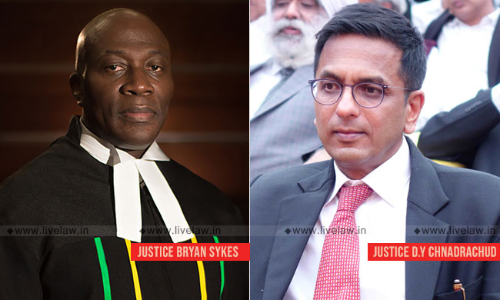
The Afterlife Of The Aadhaar Dissent: The Jamaican Supreme Court Judgment Quashing NCID
Justice Charles Evan Hughes' famous aphorism, that a dissent is an "appeal to the brooding spirit of the law, to the intelligence of a future day", has passed into legend. It was famously invoked by Justice H.R. Khanna, while concluding his dissent in the Habeas Corpus case. But sometimes, a dissent is not limited to a footnote in the judicial lore of a nation, waiting for the years to pass by until the "intelligence of a future day" dawns. Sometimes, like the swallow flying south, a dissent...
Two Be Or Not Two Be: Section 33(7) Of Representation Of Peoples Act 1951
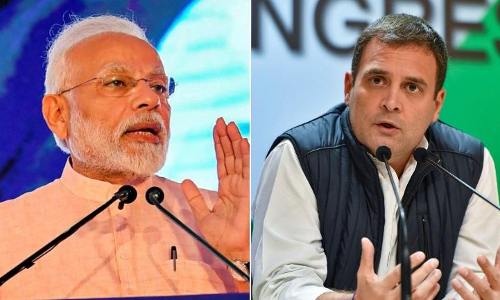
Recently there has been news about Congress President Rahul Gandhi considering Wayanad as a second seat to contest Lok Sabha polls. Contesting elections from more than one seat is not new in the Indian scenario. Indira Gandhi contested the 1980 general elections from Medak and Rae Bareli, Sonia Gandhi contested from Amethi and Bellary in 1999. More recently, the current Prime Minister Narendra Modi contested the 2014 elections from Vadodara and Varanasi. The list incorporates various other...
SC's RBI Circular judgment: A Treatise On Interpretation Of Statutes
The recent Supreme Court judgment on the RBI circular dated 12th February 2018 is a treatise on the subject of interpretation of statutes. The judgment, sound on its reasoning, struck down the circular issued by RBI through which it had asked the lenders to institute a board-approved policy for the resolution of stressed assets. The circular which was struck down gave defaulting companies with debts over INR 2,000 crores and above a period of 180 days to agree on a resolution plan with lenders...
Speeches And Elections In India: What Can The Electoral Candidates Not Say?
India, the world's largest democracy shall be witnessing elections for the parliament shortly. The election season in India has candidates across political parties, making passionate speeches to convince the voters to choose them over their rivals. The speeches range from issues of progress, living standards and at times race, religion, caste etc. A common misconception however, exists that electoral candidates have absolute freedom over the content of their speeches. In a country as diverse as...
Evolution Of The Model Code Of Conduct
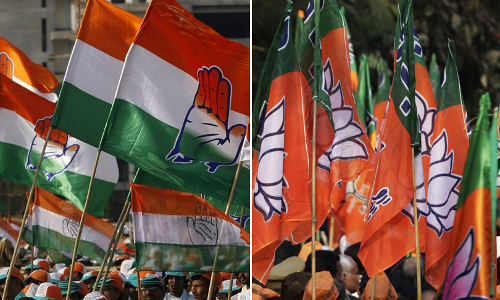
The Election commission of India, recently, i.e. in March, announced the Model Code of Conduct, 2019 for the upcoming General Assembly Elections. Since we are not faraway form general election, I make an attempt to explain the historical evolution of the Model code of conduct, the challenges faced regarding its legality and the key highlights of the 2019 Model Code of Conduct (hereinafter referred to as 'MCC'). HISTORY OF THE MODEL CODE OF CONDUCT According to a Special release of the...
How Inclusive And Diverse Jamia Millia Islamia Is? – Jamia Diversity Census 2018-19
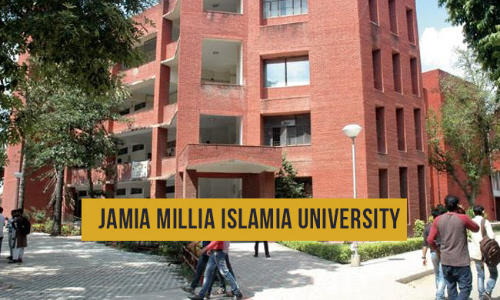
Inclusion and diversity need to be cultivated in Indian legal education. There is research showing top law schools, particularly NLUs, are elite and exclusive; the elusive islands of excellence are majorly populated by privileged students– the financially sound, the upper caste, the resident of big city and the child of educationally strong parents. Within that pool, the best performers possess a greater degree of such privileges. In this context, viewing Jamia Millia Islamia, a Muslim-minority...