


Articles
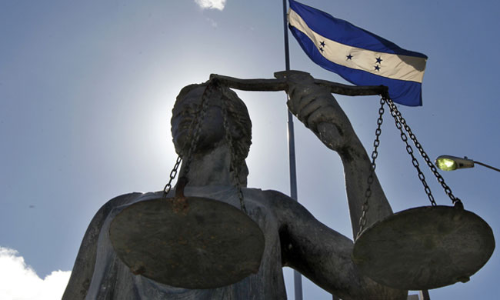
Applying Basic Structure Theory To Strike Down Original Provision Of The Constitution: A Strange Tale In Honduras
In 1973, the Supreme Court of India became the first Constitutional Court in the world to recognize implied limitation on amendment power (Basic Structure Theory) of the legislature in the famous Kesavananda Bharati Case.[1] The Supreme Court declared that the original constitution contains certain features that are beyond amendment. The judgment was denounced by many constitutional experts who found the invocation of the doctrine as a facet of judicial overarch. However, with passage of time,...
President And People Must Save RTI From This Bureaucratic Onslaught On CIC
The proposal to create two bureaucratic panels to receive complaints against CICs will reduce the CIC to the level of a glorified clerk without glory. It is a ridiculous proposal to make such 'officers' who are supposed to obey the directions of ICs and CIC, as superior authorities to inquire into the complaints against CICs. This is another conspiratorial attempt to kill the institution, which was asking the Government offices to disclose the corruption and other cases against its officers. Its...
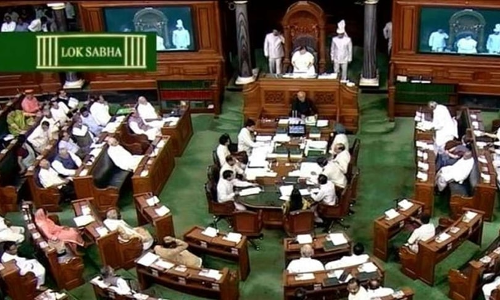
On Money Bills And Judicial Review
Over the course of the last five years, several laws of substantial and wide-reaching importance have been enacted without securing the Rajya Sabha's assent. These have included, among others, legislation such as the Aadhaar Act, the Specified Bank Notes (Cessation of Liabilities) Act, 2017, which provided imprimatur to the government's demonetisation programme, and the Finance Act of 2017, through which a raft of statutes was amended, and various different judicial tribunals were either newly...
Judicial Backlogs Can Become History
We have been hearing that the Indian Judiciary would need decades to clear its backlog.The judicial system has become irrelevant for the common citizens, and this is responsible for many ills plaguing our Nation, like disrespect for laws and corruption. The ease of doing business also suffers and the rule of law cannot really prevail. The poor and marginalized are hit most in this state of affairs. Supreme Court judge Justice A M Khanwilkar acknowledges that at least 90 percent people give up...
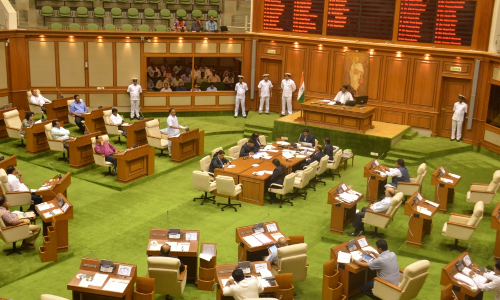
Goa Assembly: The Midnight Merger X-Rayed
Borrowing words from the historic Freedom at Midnight ('Tryst with Destiny') speech of Pandit Jawaharlal Nehru to paint the midnight political drama in the Speaker's Chamber at the Goa Assembly Secretariat on March 27, would be parody. Nonetheless, when the whole India was asleep, at the midnight hour, Goa awakened to a new dawn of political darkness and illegitimate defections christened as merger at the unholy communion delivered by Deputy Speaker Michael Lobo, presently the Acting Speaker. ...
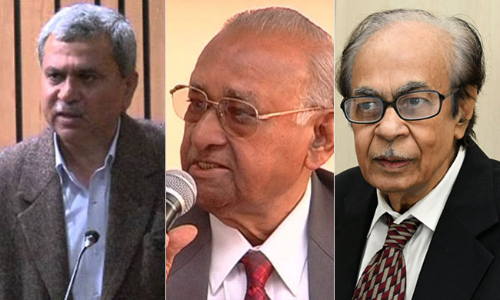

India Begets Its First Lokpal, And How - Hitherto Unopposed And Virtually Opaque?
From being recommended by the First Administrative Reforms Commission back in 1966, from as many as eight failed attempts at a legislation up till 2011, to crusader Anna Hazare's hunger-strike the same year that effectively set the Parliament in motion, to the law eventually seeing the light of the day in January, 2014, and after battling it out at the apex court for nearly five years hence, on Saturday India got its first Lokpal chairperson in former Supreme Court judge Justice Pinaki Chandra...

Checking Ethical Dilemma For Litigation Funding In Indian Context
Recently, I, attended a top-notch law firm's panel discussion event. One of the topic was Third Party Funding in Litigation. Like most of the lawyers, my knee jerk reaction was- no we can't -our Bar rules bar that. It's unethical and immoral for us. Was I wrong or was I right? I guess both. I was right that we the lawyers cannot fund litigation or take contingency fee. But I was wrong at the same time. Topic was third party litigation funding (TPLF). This means that any but a lawyer can fund it....
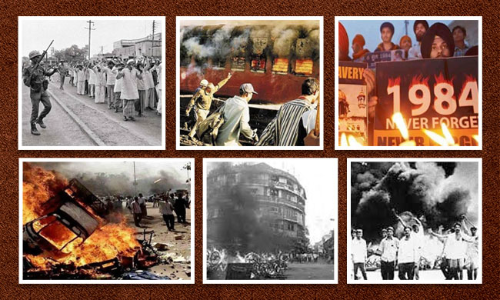
Crimes Against Humanity : Need For A Legal Framework For Mass Crimes In India
In 1941, Winston Churchill in an uncertain response to Nazi atrocities called them "crimes without a name". Almost two years later Polish scholar Raphael Lemkin termed it for the first time as Genocide. In December 2018, the Delhi High Court in State Through CBI v. Sajjan Kumar and Ors. had its Churchill moment when adjudicating upon political riots against Sikhs (1984). It observed that India has not yet recognized Genocide and Crimes against Humanity (Para 367 onwards): "367.6 …..The...
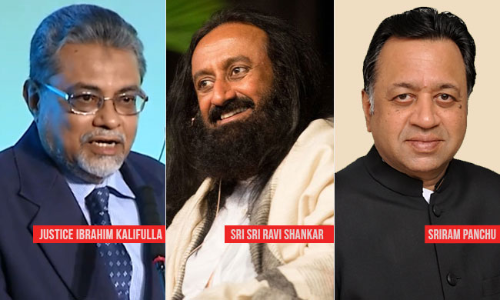
The Ayodhya Mediation – An Optimist's View
Public opinion is divided on the decision of the Supreme Court of India to refer the Ayodhya dispute to mediation. There are some who welcome the decision in the hope that there will be a peaceful resolution of the long-pending, and at times bloody, dispute. However, others feel that this is not a fit case for mediation and that the Supreme Court is using mediation as a ruse to avoid the onerous task of deciding the vexatious issue. Is the referral to mediation an abdication of...