




Know the Law
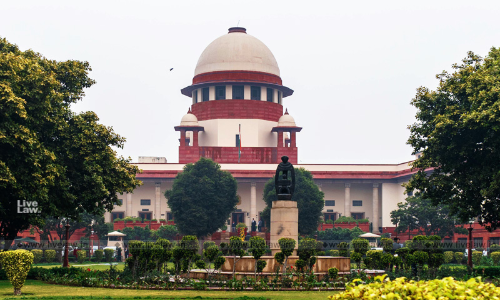
'My Lord Or Your Honour?': How To Address Judges In India?
On 13th August 2020, an interesting exchange happened between the Chief Justice of India SA Bobde and a lawyer on how to address the Court. A lawyer addressed the bench presided by the CJI, which was hearing the cases through video conference, as 'Your Honour'. "Are you appearing before the US Supreme Court?", CJI Bobde asked the lawyer. According to CJI, the use of ' Your Honour' is not...

EIA Notification: Judiciary's Tryst With 'Ex Post Facto' Environmental Clearance
The phrase 'Ex Post Facto' is being widely used these days, thanks to Clause 22 of the Draft Environment Impact Assessment 2020. Ex Post Facto is a Latin phrase which means 'done, made, or formulated after the fact'.The controversial clause 22 of the Draft Environment Impact Assessment 2020 provides a route for those who run a project or an activity without obtaining...

Doctrine Of Proportionality - An Explainer
The idea of doctrine of proportionality appears first in Aristotle's Nicomachean Ethics, Book 8. Proportionately measures distributive justice in Aristotle's schema. Aristotle's concept, in short, can be said to be of 'recta ratio', that is, Right reason or the right relationship between the state and the citizen, adjudicated by the rule of law.Doctrine of proportionality finds its...
![Injustice To Daughters In Hindu Shastric Law Done Away With: SC Explains The Impact Of Hindu Succession (Amendment) Act 2005 [Read Judgment]](https://www.livelaw.in/h-upload/2019/08/26/500x300_363600-hindu-succession-act.jpg "Injustice To Daughters In Hindu Shastric Law Done Away With: SC Explains The Impact Of Hindu Succession (Amendment) Act 2005 [Read Judgment]")
Injustice To Daughters In Hindu Shastric Law Done Away With: SC Explains The Impact Of Hindu Succession (Amendment) Act 2005 [Read Judgment]
In its landmark judgment recognizing the equal rights of daughters in coparcenary property, the Supreme Court has explained the law regarding devolution of coparcenary property and also the impact of 2005 amendment to Hindu Succession Act on daughters' right to it.The bench comprising Justices Arun Mishra, S. Abdul Nazeer and MR Shah, observed that the classic Shastric Hindu law excluded...
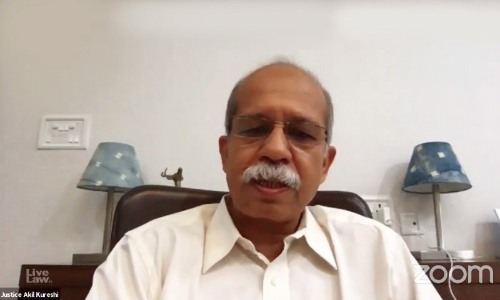
'Develop Childlike Curiosity To Become An Outstanding Lawyer': Justice Kureshi's Tips On Good Advocacy
In a recently organized webinar by Livelaw on How to extend classroom training into good advocacy, Justice Akil Kureshi, Chief Justice of the Tripura High Court imparted his valuable insights on a range of topics relevant to the profession. Starting from the role that a strong bar plays in the justice delivery system to discussing the adequacy of the current academic structure of...
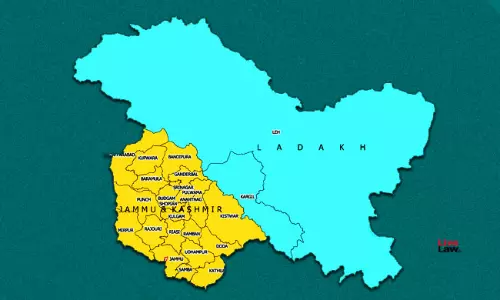
Deciphering The Jammu & Kashmir Reorganisation Act, 2019
"The text should be construed as a whole. A legal instrument typically contains many interrelated parts, and thus the entirety of the document provides the context for each of its parts. This canon typically establishes that only one of the possible meanings that a word or phrase can bear is compatible with use of the same word or phrase elsewhere in the statute." – A Guide to...
![Sec 57 Of Transfer Of Property Act Permits Court To Declare A Property Free Of Encumbrance Even Against Will Of Encumbrancer: Kerala HC [Read Judgment]](https://www.livelaw.in/h-upload/2019/12/28/500x300_368450-kerala-hc-and-justice-devan-ramachandran.jpg "Sec 57 Of Transfer Of Property Act Permits Court To Declare A Property Free Of Encumbrance Even Against Will Of Encumbrancer: Kerala HC [Read Judgment]")
Sec 57 Of Transfer Of Property Act Permits Court To Declare A Property Free Of Encumbrance Even Against Will Of Encumbrancer: Kerala HC [Read Judgment]
In a significant judgment, the Kerala High Court explained the procedural mechanism under Section 57 of the Transfer of Property Act, 1882, to lift encumbrance from an immovable property. The order, passed by Justice Devan Ramachandran, assumes relevance since there is no case law/ precedent on this subject. The verdict opens with emphasis on the "efficacious and...

An Introduction To FIR
If you've been brought up in India, you'd know one term which has been most loosely used is F.I.R. From the shopkeepers in your local market to the big media houses, from tenants to landlords or even brothers disputing a will, the easiest respite is to threaten the other person. Most common one being threat against lodging a F.I.R. So what is it exactly? Where, when and by whom can it...

Judicial Inroads Into Arbitration: Section 34 Saga
The theme of "Judicial Inroads into arbitration" is replete with conundrums; one can easily get bogged down in definitions and the limits, both conceptual as well as practical. The objective of this article is to focus on some test cases and, consequently, a somewhat narrower field dealing with the scope of judicial interference into domestic arbitration awards. The diversity of the topic is primarily because arbitration continues to evolve at a rapid pace in India. This is an area...

Law And Regulations On Issuance/Grant Of Degrees In India
The problem of timely issuance of degrees is a major cause of concern for various students across India. Many students are compelled to file cases against their own universities for timely issuance and grant of their own degrees. Many students have lost out on wonderful opportunities due to this non-issuance of degrees while applying abroad for further studies. It is noted that more...

Fatal Motor Accident Cases: Principles For Computing Compensation
With over 1.5 lakh deaths annually in motor accident cases in India (as per the latest official records), it is not unsurprising that claims on account of compensation for motor accident deaths is one of the most disputed arenas of litigation in the Supreme Court. Time and again the Apex court has attempted to lay down a rule of thumb to grant compensation to ensure that...
Arbitration: 2019 Amendment To Section 29A Timeline Has Retrospective Effect From 23 October 2015, Holds Delhi HC [Read Judgment]
Infusing clarity on the applicability of the amended Section 29A of the Arbitration and Conciliation Act, 1996, ("the Act"), the Single Judge of the Delhi High Court ("Court") in the case of ONGC PETRO ADDITIONS LIMITED vs. FERNS CONSTRUCTION CO. INC, pronounced on 21 July 2020, has found that the amendments to Section 29A (1) in 2019, fixing the 12 month time frame from the completion...