




High Court of J & K and Ladakh
Recommendation For Out-Of-Turn Promotion Does Not Create Right To Retrospective Promotion: J&K&L High Court
The Jammu & Kashmir and Ladakh High Court has held that a recommendation for out-of-turn promotion does not, by itself, create an enforceable right to claim retrospective promotion, even where another employee has been granted a similar benefit.A Division Bench comprising Chief Justice Dr. Pushpendra Singh Bhati and Justice Wasim Sadiq Nargal made the observation while allowing a petition filed by the Union Territory of Jammu and Kashmir and the Director General of Police, setting aside a...
Longstanding Possession Of Land Cannot Be Treated As Unauthorized Under Migrant Property Act Without Proper Enquiry: J&K&L High Court
The Jammu & Kashmir and Ladakh High Court has held that longstanding possession of land, recorded in revenue records decades before the enactment of the Jammu and Kashmir Migrant Immovable Property Act, 1997, cannot be treated as unauthorized occupation merely because the occupants fail to establish formal title or a lawful tenancy.Justice Sanjay Parihar set aside orders passed by the Deputy Commissioner, Bandipora, and the Financial Commissioner (Revenue), holding that the authorities had...
Proceedings Under Sections 107 And 117 Cr.P.C. Are Preventive In Nature And Do Not Attract Bar Of Double Jeopardy: J&K&L High Court
The High Court of Jammu & Kashmir and Ladakh at Jammu has held that proceedings under Sections 107 and 117 of the Code of Criminal Procedure are preventive in nature and not punitive, and therefore do not attract the bar of double jeopardy under Article 20 of the Constitution of India.The Court dismissed a petition seeking quashing of a charge sheet, holding that the purpose of preventive proceedings and proceedings initiated pursuant to an FIR are entirely different, and that mere previous...
Disability Not Recorded At Enrolment Presumed To Have Arisen During Service Unless Rebutted By Cogent Medical Evidence: J&K&L High Court
The Jammu & Kashmir and Ladakh High Court has upheld an Armed Forces Tribunal order granting disability pension to an Ex-Lance Naik, holding that a disability not recorded at the time of enrolment is presumed to have arisen during service unless the presumption is rebutted by cogent medical evidence.A Division Bench of Justice Sindhu Sharma and Justice Shahzad Azeem dismissed a writ...
Jammu & Kashmir And Ladakh High Court Weekly Roundup October 12 - October 18, 2026
Nominal Index:Devinder Singh and Others v. Union Territory of J&K 2026 LiveLaw (JKL) 453Khayal Shafi Badana v. Union Territory Through Police Station Rajbagh 2026 LiveLaw (JKL) 454Tara Chand and Another v. Bhagat Ram 2026 LiveLaw (JKL) 455Farhat Ali Khanday v. Union Territory of Jammu & Kashmir and Others 2026 LiveLaw (JKL) 456Sheikh Mohammad Yaseen v. Ali Mohammad Shora 2026...
₹20 Lakh Funding, BKI Letter Pad Recovered From House: J&K&L High Court Denies Bail To Accused In Narco-Terrorism Case
The Jammu & Kashmir and Ladakh High Court has refused bail to a man accused of allegedly financing a cross-border heroin smuggling operation to raise funds for the banned terrorist organisation Babbar Khalsa International (BKI), observing that the recovery of an alleged BKI letter pad from his residence, statements of protected witnesses and other material prima facie indicated his role as...
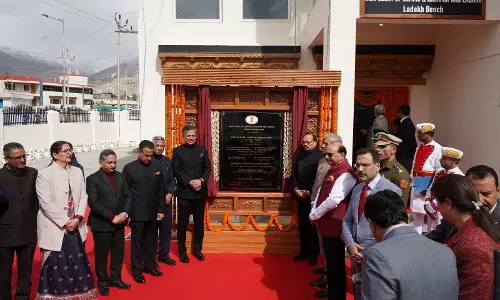
CJI Surya Kant Inaugurates Ladakh HC Bench, Assures All Matters From Region Will Be Listed On Single Day In Supreme Court
Chief Justice of India Surya Kant on Sunday inaugurated the Ladakh Bench of the High Court of Jammu & Kashmir and Ladakh in Leh and announced that the Supreme Court would list all matters originating from Ladakh on a single day, once adequate video-conferencing facilities are available to lawyers practising before the new Bench.The CJI said the Supreme Court would also hear these matters on...
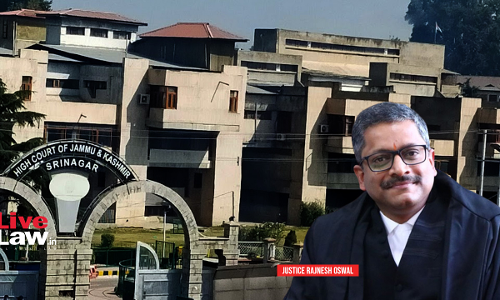
Cheques Issued For Land Deal Disputed Over Ownership: J&K&L High Court Upholds Unconditional Leave To Defend ₹1.35 Crore Suit
The Jammu & Kashmir and Ladakh High Court has held that where the very basis for issuance of cheques is disputed through cogent material, the question of whether they were issued in discharge of a legally enforceable debt or liability becomes a triable issue.Justice Rajnesh Oswal made the observation while dismissing a petition filed by a man challenging an order granting unconditional...

J&K&L High Court Bans Fuel-Powered Motorboats, Shikara Motorboats, Jet Skis In Dal Lake Until Further Orders
The Jammu & Kashmir and Ladakh High Court has directed authorities to ensure that no fuel-powered motorboat, including motorised shikaras and Jet Skis, operates in Dal Lake until further orders, observing that a policy regulating such activities must balance tourism with pollution control and the preservation of the lake's ecosystem.A Division Bench comprising Chief Justice Dr....
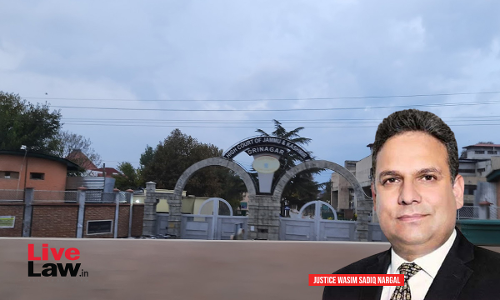
J&K&L High Court Seeks Explanation From Trial Court For Not Pronouncing Order On Clarification Plea For Nearly A Year
The Jammu & Kashmir and Ladakh High Court has sought an explanation from a Srinagar trial court for not pronouncing an order on an application seeking clarification of an earlier order, despite arguments having concluded on October 3, 2025.Justice Wasim Sadiq Nargal observed that the record prima facie supported the petitioners' contention that the application had remained undecided...
Employees Entitled To Regularization From Date They Fulfil Statutory Conditions, Not From Date Of Formal Regularization Order: J&K High Court
A Full Bench of the Jammu & Kashmir High Court comprising Chief Justice (Acting) Sanjeev Kumar, Justice Sanjay Dhar and Justice Mohd Yousuf Wani held that the right to regularization under Section 5 of the J&K Civil Services (Special Provisions) Act, 2010 accrues immediately upon fulfilment of the prescribed conditions. It does not depend on when the competent authority passes...
Doctors Not Discharging Duties Under MTP Act, Leaving Distressed Mothers To Approach Courts: J&K&L High Court
The Jammu & Kashmir and Ladakh High Court has expressed concern that registered medical practitioners, particularly those working in medical college-associated hospitals and district hospitals, are failing to discharge their statutory responsibilities under the Medical Termination of Pregnancy (MTP) Act, 1971, and the rules framed thereunder in justified cases, leaving distressed women...