


Articles
Social Context Adjudication: 'A Tool That Can Be Used By The District Judiciary To Provide Social Justice Without Writs And PILs'
The 'Preambular promises' of justice, liberty, equality and fraternity give the blue print of the type of society which 'We the people of India' resolved to give to ourselves. The Constitution of India provides a roadmap by weaving a pattern of rights and duties for establishing an egalitarian society based on the principles of fraternity and social justice. When India gained independence, the three main goals to be achieved were national integration, bringing dignity and justice to those...

Crimes Against Women: Eyes Of The World Are On India
On November 10, 2022, India's track record on human rights was peer reviewed at the 41st session of the Universal Periodic Review (UPR) Working Group at the United Nations Human Rights Council. While various issues related to civil and political rights, as well as economic and social rights were highlighted during the session, a running theme across the entire session was the issue of crimes against women in India, which was flagged as a concern by almost every Member State of the UN...

Offline Personal Data Not Within The Purview Of The Digital Personal Data Protection Bill, 2022
The draft digital personal data protection bill, 2022 was released on 18th November. The bill carries some drawbacks despite taking a lot of time for its finalization. One of those drawbacks is the ignorance of offline consumer and their rights. Section 4 (3) (b) of the draft digital personal data protection bill, 2022 states that the Act shall not apply to offline personal data. In order to ensure the privacy of offline consumers, it is important that the collection of offline personal...
Rights Of Rape Victims
Rape is a stigma which exists in the society from a long time. Rape in India is a cognizable offence. Section 375(1) of Indian Penal Code defines rape as sexual intercourse with a woman without her consent, it amounts to rape. As there ports of the police in the national capital Delhi is that there's an increaseof 21.6% in rape cases registered in 2021 as compared to the 1618 cases in 2020[1]. Following this there were widespread agitations and women's movements which led to several ...
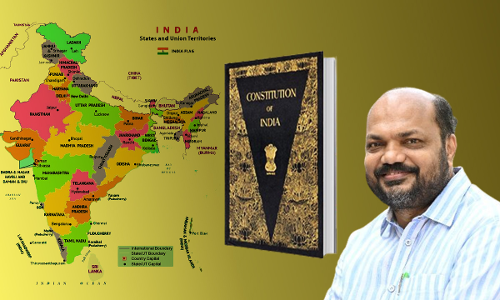
Federalism Under Crisis: Unveiling The Constitutional Aspirations On Higher Education
During my tenure in the Indian Parliament one of the most exciting experiences was when, I had objected the introduction of a legislative bill which intended to incorporate a University in Budhalkand. The objection was based on the legislative competency of the Parliament to incorporate a university in a state. A cursory glance, into the provisions of our Constitution reveals that although "education", is placed in the concurrent list by a Constitutional amendment, however the...

"Tofan Singh's Case" Opens Up New Horizons In The Law Of "Confessions" In Criminal Trials
(This is the text of a webinar lecture which the author had made in a lawyers' collective.) I begin this lecture with my usual caveat that I am not an expert in criminal law. I am only a "facilitator" who is willing to share his experience and knowledge with you in the expectation of learning a lot from you in return. Even at the december of my life, I have no roses to offer and I still consider myself a student of law and I will continue to be so till my last breath. 2....
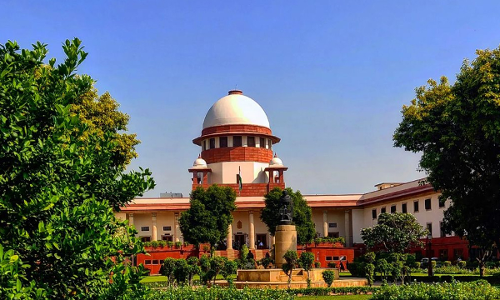
Pendency Issue In Indian Courts Can Be Resolved By Increasing Judicial Strength By 20% | Column
During an interview with Indian Express reported on 9 November 2022 Chief Justice of India Justice DY Chandrachud said: "There are some key areas which need to be attended to. First and foremost, the unfilled posts in judiciary. The need to fill up all posts in the judiciary, beginning with the district judiciary, high courts and, ultimately, the Supreme Court." The CJI has identified his first priority with a great understanding that filling vacancies must be his first priority since it...

Regulation Of Online Bond Platforms ("OBP")
Under the Indian Companies Act, 2013, a public company can issue debt instruments either through a public issue or private placement[1]. While public issues are done on the stock exchanges, private placements are done on electronic book provider platforms ("EBP"). Over recent years, the issue of debt securities through private platforms on the EBP have grown in leaps and bounds. To put it in perspective, in the financial year 2021-2022, 1,405 issue of listed debt securities were done...
Need To Review The Present System Of Transfer Of High Court Judges
In view of the recent recommendation of the Supreme Court Collegium to transfer Justice Nikhil S. Kariel from his parent High Court, i.e., from High Court of Gujarat to the High Court of Patna and also recommendation to transfer Justice A. Abhishek Reddy from his parent High Court, i.e., from High Court of Telangana to the High Court of Patna and the another recommendation to transfer Acting Chief Justice T. Raja from his parent High court, i.e., from High Court of Madras to the High Court...

Blurred Lines: The Impact Of Covid-19 On The Rule Of Law
The onset of the Covid-19 pandemic has had multifarious effects on the laws of governance and the concept of "Rule of Law" across jurisdictions. Governments found themselves in precarious positions where they had to take immediate, unprecedented actions, the ramifications of which became a matter of life and death for millions of people. This resulted in ordinances and make-shift orders being passed swiftly without proper standard procedure and/or due care. During this time, in more cases...

Effects Of Non- Registration Of Trademarks
A trademark means a brand, label, name, signature, word, letter, logo, numeral, shape of goods, packaging or combination of colours, capable of distinguishing the goods and services of a person from those of others, as per section 2(zb) r/w section 2(m) of the Trade Marks Act, 1999 ("Act"). The proprietor of a trademark invests a considerable amount of time, money and effort to build a reputation and goodwill for his trademark, such that the consumers of his goods or services associate...

Private Defence In The Context Of Partner Violence : When Jayabharathi Discovers The Fighter In Her | Law On Reels
Jayabharathi in the Malayalam movie "Jaya Jaya Jaya Jaya He", fondly called Jaya is an ordinary next door girl, short and lean in stature from a very humble background. The Jaya, the author refers to is the character from the recent Malayalam movie 'Jaya Jaya Jaya Jaya Hey'. Jaya like many amongst us was also indoctrinated to be less ambitious, tutored to adjust her needs and suppress her choices. In every crucial decision about her life from the choice of career to choice of marriage her...