


Articles
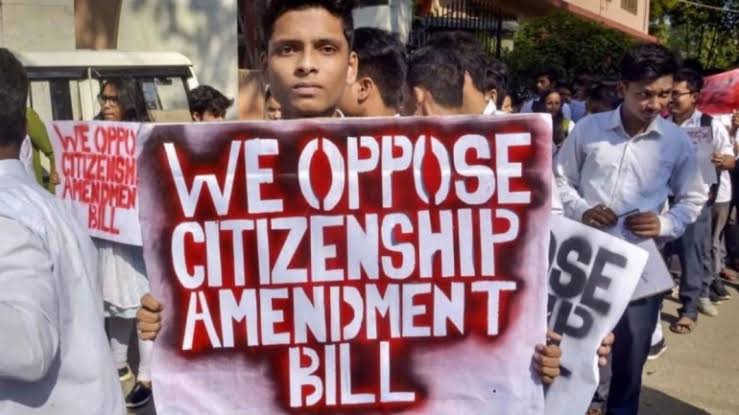
CAB: A Bill That Robs India's Conscience And Secularity
To our amazement and disbelief, the lower house of the Indian Parliament has passed the Citizenship (Amendment) Bill 2019 with a provision to exclude Muslim refugees (persecuted or otherwise) from Pakistan, Bangladesh and Afghanistan in granting citizenship of India. If the Bill is passed by the Rajya Sabha, the upper house, we will be set to witness as how religious affiliation of an individual is not only deciding his/her civic identity in a secular State but also all the rights that...
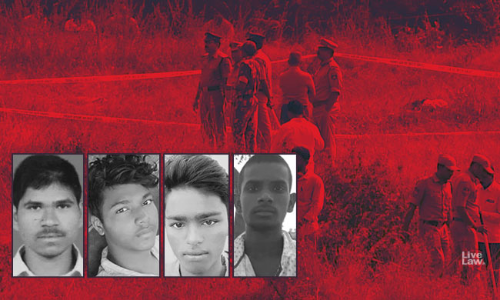
Encounter: Can Hyderabad Police Prove Their Claim?
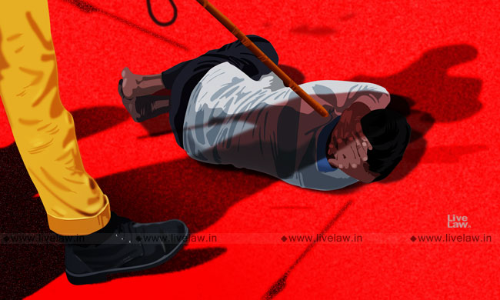
Whether Hyderabad Police ready to prove they killed four accused in self-defence? Will any police register murder case against the 'accused' police? Only if the encounter killing is proved to be essential for killing, the police officers involved has to be considered as not accused, if not there should be a case registered and investigated, as per the guidelines and the rule of law today. If the claim of Hyderabad police is based on untruthful statements, it is difficult to believe...
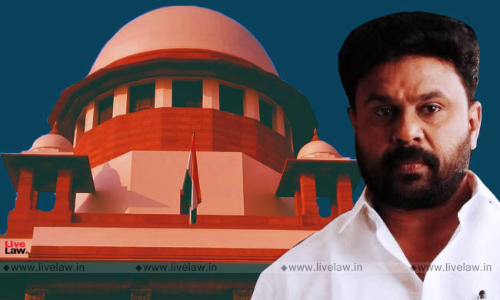
SC Order In Dileep Case: Some Pertinent Questions
Seminal question which arose for consideration by the apex court in the appeal preferred with special leave against the Order of a single judge of the High Court of Kerala in P.Gopalakrishnan @Dileep Vs. State of Kerala and another was whether the contents of a memory card/ pen- drive would qualify as a document covered by Sec.3 of the Evidence Act and defined under Sec. 29 of the Penal Code; and, if so, whether furnishing a cloned copy of such memory card/ pen-drive produced with...

Law On Reels- 'Aakrosh' : On Women's Honour In Men's World
Inspired from a positivist understanding of law, 5 year based law courses teach law in an isolated manner focusing heavily on legislations and case laws. But that is rather an incomplete picture of law and its working. Critical Legal studies movement in America has shown us that law is not neutral; it works within societal structures with its own biases.[1] For example- let us take feminist critique of law. Feminist legal scholars for long have argued that law is patriarchal while some...


[On Death Anniversary]Ambedkar's Internationalism And Anti-Discrimination Discourse
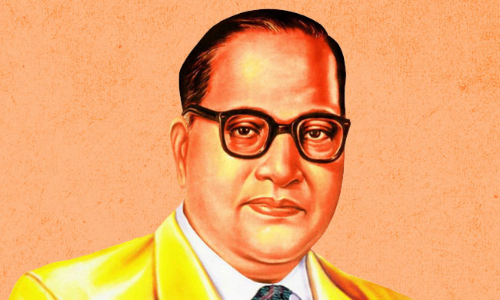
Few months after the demise of B.R. Ambedkar on 6th December 1956, Ram Manohar Lohia wrote to one of his closest associates (Madhu Limaye) that Ambedkar could be shown to the outside world as "a symbol of upright India". While Lohia would have said this because of Ambedkar's enormous contributions in reforming India, the latter's works and efforts provide us with a platform to build a global anti-discrimination discourse. Ambedkar developed his ideas for the Indian Constitution by...
The Citizenship (Amendment) Bill Is Unconstitutional
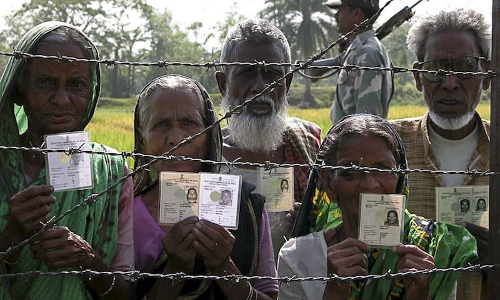
The BJP-led Union government is determined to table the Citizenship (Amendment) Bill, 2019 in this parliamentary session, after it lapsed earlier in the year. The bill proposes to amend Section 2 (b) of the Citizenship Act – which defines 'illegal immigrants' – by excluding "persons belonging to minority communities, namely, Hindus, Sikhs, Buddhists, Jains, Parsis and Christians from Afghanistan, Bangladesh and Pakistan" from the ambit of "illegal immigrants". The bill also reduces the period of...
Cruelty Against Disha; Shall We Hang All The Criminals?
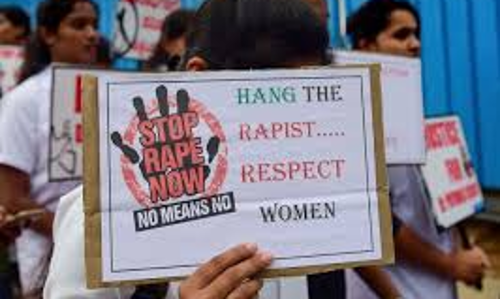
Some want instant killing. Others propose lynching. MPs were emotionally demanding public lynching or castration. It is fact that civil society is rattled at the cruelty of accused against the young lady in Hyderabad. Every crime, including this, is result of combination of various factors including the bloody crime of a cruel inhuman being. Whenever a ghastly crime is committed, the society feels hurt and reacts emotionally to demand the severe punishment to the criminal. Even in...
Governor's Discretion And The Cascading Effects On Constitutional Balance
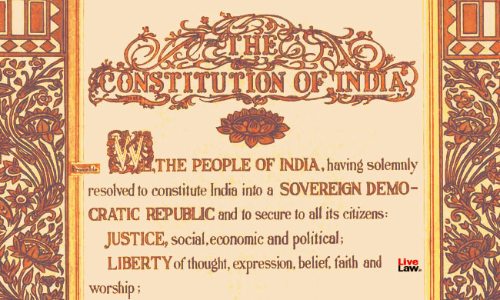
Constitutions across the world, by their inherent nature, do not provide for an isolated functioning of any organ of the government and provide for a holistic system of governance with corresponding inter-play between different organs of the State. So thus the Constitution of India. Whereas the essence of checks and balances must be imbibed in the functioning of every organ, it comes with certain limitations, mostly emanating from the doctrine of separation of powers and judicial principle of...