


Articles
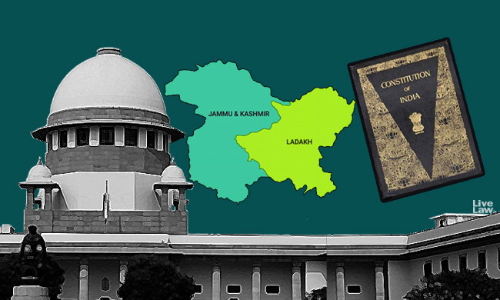
J&K Petitions : When SC Feels Unburdened By The Constitution
"The State of Jammu & Kashmir, keeping in mind the national interest and internal security, shall make all endeavours to ensure that normal life is restored in Kashmir; people have access to healthcare facilities and schools, colleges and other educational institutions and public transport functions and operates normally. All forms of communication, subject to overriding consideration of national security, shall be normalized, if required on a selective basis, particularly for ...

Arbitrability Of Fraud: A Critique Of India's Problematic Jurisprudence
The issue relating to arbitrability of fraud has a chequered judicial past in Indian courts and the judicial pronouncements have not settled the controversy at rest. The decisions on this subject matter that are germane for a clear understanding are N. Radhakrishnan v. Maestro Engineers & Ors,[1] Swiss Timing Limited v. Commonwealth Games 2010 Org Committee,[2] World Sport Group Limited v. MSM Satellite,[3] Booz Allen & Hamilton Inc v. SBI Home Finance Limited & Ors,[4] ...

The Effect Of Motor Vehicles (Amendment) Act, 2019 On Ola And Uber
With the progress in technology and the advent of cab-aggregator platforms such as Ola and Uber in India, an amendment to the Motor Vehicles Act was long due. The Motor Vehicles (Amendment) Bill, 2019 ("2019 Amendment") has amended Section 93 of the Motor Vehicles Act, 1988 ("Principal Act") by adding the term "aggregator" to the existent terms "agent" and "canvasser" to the section. The term "aggregator" has been defined as "a digital intermediary or marketplace for a passenger to connect...
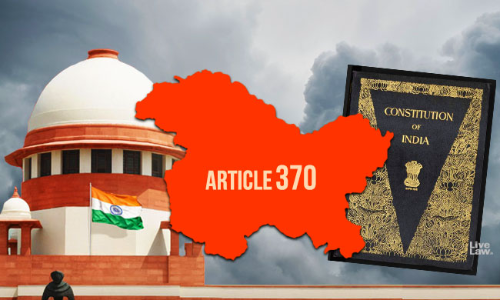
Jammu & Kashmir : As Uncertainty And Fear Looms Large, The Idea Of Justice Remains Elusive
According to Article 144 of the Indian Constitution, "All authorities, civil and judicial, in the territory of India shall act in aid of the Supreme Court." Despite the constitutional imperative being so, a person who has been observing the Supreme Court proceedings on the challenges mounted against the clampdown after 5th of August in Kashmir, might comprehend Article 144 conversely - Does the Supreme Court act in aid of executive authorities ? On 16thSeptember, 43 days after the ...

Morality Clauses In Sports Contracts : A Hit Or A Miss?
In the hectic world of sports where athletes are parties to several contractual agreements, be it sponsorship deals or brand endorsements, it is often found that these agreements contain certain provisions that serve the purpose of curtailing or rather prohibiting a certain type of behavior of the parties to the contract. These provisions are known as Morality Clauses, and are becoming the most common reason behind the termination of contracts that athletes enter into. This paper will...

Proper Conduct of AIBE - A Lawyer's "Wishful Dream"
On 26.08.2019, a notification was issued by the Bar Council of Delhi with regard to the non-passing of the All India Bar Examination (AIBE). As per the notification, since 2010, a total number of 4,778 advocates had failed to qualify the exam and thus, were "not entitled to practice or enjoy any benefits, including voting right in the Bar elections". A candidate is allowed to practice with their State Bar Council enrolment for a period of two years and within this period, they are supposed to...
Unravelling The Ground Of 'Patent Illegality' For Setting Aside Arbitral Awards
'While the institution of patent illegality sub-ground under 'public policy' under section 34(2)(b)(ii) of the 1996 Act for setting aside a domestic arbitral award has been an exercise of judicial creativity, the Parliament ought to have defined the 'patent illegality' ground while amending the 1996 Act through the 2015 Amendment Act'.
Should Judges Go By Rule Of Law Or Rulers' Law?
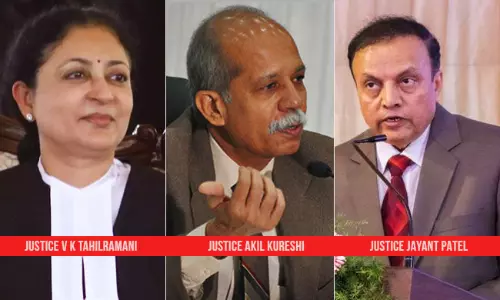
"The power of transfer is a highly dangerous power involving great hardship and, injury to the judge transferred including a stigma on his reputation in cases where the transfer is not effected pursuant to any policy but the judge is picked out for transfer on a selective basis and to my mind, it makes no difference whether the transfer is made by the government on its own initiative or it is made at the instance of the Chief Justice of India." This statement given by the Constitution Bench...

Online Grooming Of Children-Legal Framework
The National Crime Records Bureau has recently reported to initiate the recording of online sexual abuse of children based upon the recommendation of the 206th Parliamentary Standing Committee on Home Affairs, which noted the poor law enforcement and data in such crimes. With the internet booming in India and the increasing accessibility of children to technology, cybercrimes against children has begun to gain attention with the vulnerabilities of children in cyberspace becoming...