




High Court of J & K and Ladakh
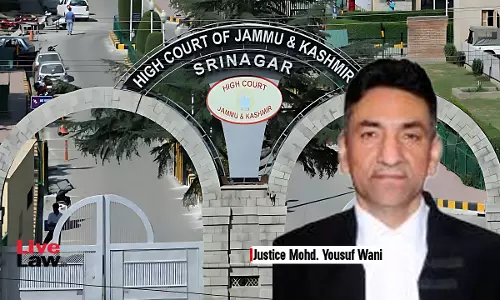
Law Provides Mechanism, Yet Minor Rape Survivor's Mother Was Forced To Approach Court: J&K&L High Court Directs Termination Of Pregnancy
The Jammu & Kashmir and Ladakh High Court has permitted termination of the pregnancy of a 17-year-old minor rape survivor, observing that the Medical Termination of Pregnancy Act, 1971 and the Rules framed thereunder already provide a complete mechanism for dealing with such cases, yet the minor's mother was constrained to approach the High Court for appropriate directions.The Court...
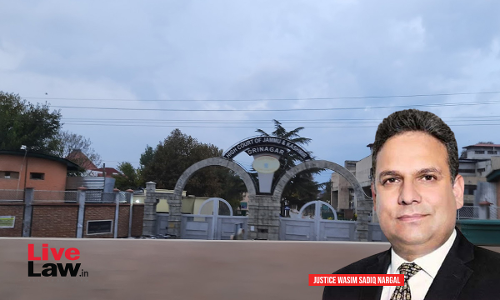
J&K&L High Court Modifies Interim Stay, Allows Jammu University To Proceed With Construction On Disputed Land Pending Ownership Plea
The Jammu & Kashmir and Ladakh High Court has modified an earlier interim order concerning 50 kanals of land at Sharief-Abad, Budgam, permitting the University of Jammu to proceed with development and construction activities over the land, subject to law and requisite statutory permissions.Justice Wasim Sadiq Nargal held that, while exercising discretionary jurisdiction under Article 226...
'Animals Feel Pain, Stress And Fear': J&K&L High Court Flags Inadequate Penalties For Animal Cruelty
The Jammu & Kashmir and Ladakh High Court, while quashing a preventive detention order under the J&K Public Safety Act, 1978, has made significant observations on the need to strengthen the legal framework dealing with cruelty to animals, particularly in view of the low penalties prescribed under the Prevention of Cruelty to Animals Act, 1960.The Court was hearing an intra-court...
J&K&L High Court Grants Bail To Treasury Official In ₹1.38 Crore Embezzlement Case, Says Bar U/S 480 BNSS Not Attracted
The Jammu & Kashmir and Ladakh High Court has granted bail to an MTS official posted at Sub-Treasury Dharmari, Reasi, in a case alleging embezzlement of ₹1,38,17,971 from the government exchequer, holding that the statutory bar under Section 480 of the Bharatiya Nagarik Suraksha Sanhita (BNSS) was not attracted to the offences alleged against him.Admitting him on bail Justice Mohd...
Adult's Choice Cannot Be Overridden By Societal Expectations: J&K&L High Court Directs Police Protection To Couple
The Jammu & Kashmir and Ladakh High Court has directed the police authorities to provide appropriate protection to an adult woman and the man of her choice, holding that her voluntary decision to lead her life with him cannot be overridden merely on account of parental disagreement or societal expectations.The Court was hearing a Letters Patent Appeal filed by Nusrat Jan and another against...
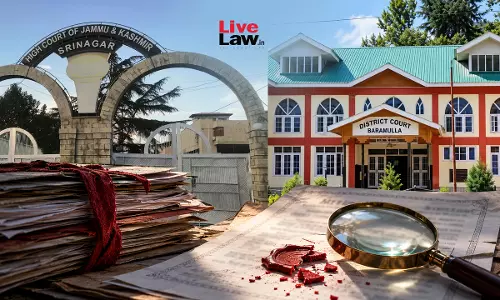
"Serious Ramifications": J&K&L High Court Transfers Investigation In Baramulla Fake Decree Case To Crime Branch, Constitutes SIT
The Jammu & Kashmir and Ladakh High Court has transferred the investigation into an alleged fabrication of judicial records in Baramulla from the local police to the Crime Branch, directing constitution of a Special Investigation Team (SIT) to comprehensively investigate the alleged conspiracy involving court staff, private persons and officials connected with the purported...
Jammu & Kashmir And Ladakh High Court Weekly Roundup September 21 - September 27, 2026
Nominal Index:Manzoor Ahmad Hajam v. Union Territory of Jammu & Kashmir 2026 LiveLaw (JKL) 407Union Territory of Jammu and Kashmir and Others v. Mushtaq Ahmad Shah 2026 LiveLaw (JKL) 408Firdous Ahmad Mir v. Union Territory of J and K (Home) and Others 2026 LiveLaw (JKL) 409Union Territory of Jammu & Kashmir v. Rayees Ahmad Shah 2026 LiveLaw (JKL) 410Mohd. Yousuf through his wife Farida...
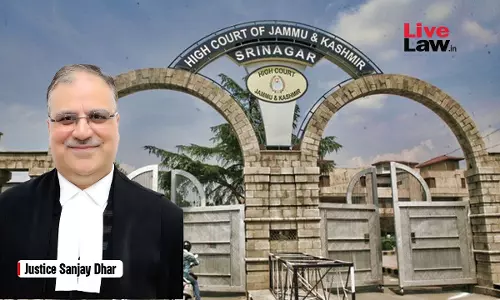
Prolonged Relationship With Man After Knowing He Was Already Married Creates Doubt Over 'False Promise Of Marriage' Claim: J&K&L High Court
The Jammu & Kashmir and Ladakh High Court has held that where an adult woman continues a prolonged physical relationship with a man even after becoming aware of his existing marriage, such subsequent conduct may, at the stage of considering anticipatory bail, give rise to an inference that the relationship was consensual rather than based upon a misconception of fact arising from a promise...
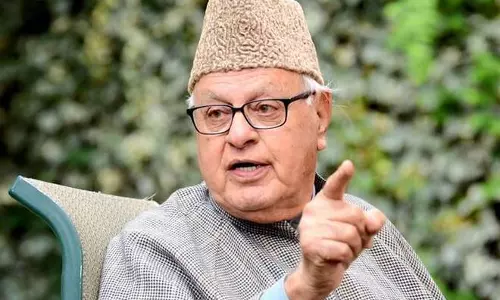
Section 216 CrPC Cannot Be Used To Add Charges Without Prima Facie Material: J&K High Court Rejects ED Plea In Farooq Abdullah-JKCA Case
The Jammu & Kashmir and Ladakh High Court has held that while a party may bring to the notice of a criminal court an alleged omission in the charges, the power to alter or add charges under Section 216 CrPC ultimately rests with the Court and can be exercised only where the material on record prima facie discloses the ingredients of the proposed offence.Justice Sanjay Parihar made...
When Can “May” Be Read As “Shall”? J&K&L High Court Applies Purposive Interpretation To Uphold Statutory Right Under Drugs & Cosmetics Act
The Jammu & Kashmir and Ladakh High Court has held that the word “may” occurring in Section 25(4) of the Drugs and Cosmetics Act, 1940 cannot be construed as conferring an unfettered discretion on the Court where such interpretation would defeat the statutory right of a person to challenge a Government Analyst's report.Justice Wasim Sadiq Nargal observed that once a person, within...
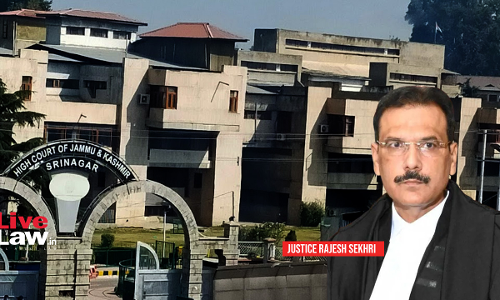
'Perfect Compensation Is Hardly Possible': J&K&L High Court Says MACT Must Restore Accident Victim To Pre-Accident Position In Fair Manner
The Jammu & Kashmir and Ladakh High Court has observed that while “perfect compensation is hardly possible”, Motor Accident Claims Tribunals must bear in mind that an accident victim has committed no wrong and should, as far as money can reasonably achieve it, be restored to the position he occupied before the accident.“Therefore, though perfect compensation is hardly possible but...
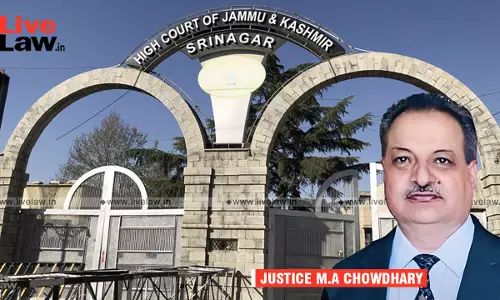
Continuous Cause Of Action Permits Amendment Of Plaint Without Fresh Suit: J&K&L High Court Allows Mesne Profits Claim In Ejectment Suit
The High Court of Jammu & Kashmir and Ladakh has dismissed a petition filed under Article 227 of the Constitution challenging an order allowing amendment of a plaint in an ejectment suit, holding that the Trial Court was justified in allowing the application under Order VI Rule 17 of the Code of Civil Procedure, 1908, as the trial had not commenced and the proposed amendment arose out of...